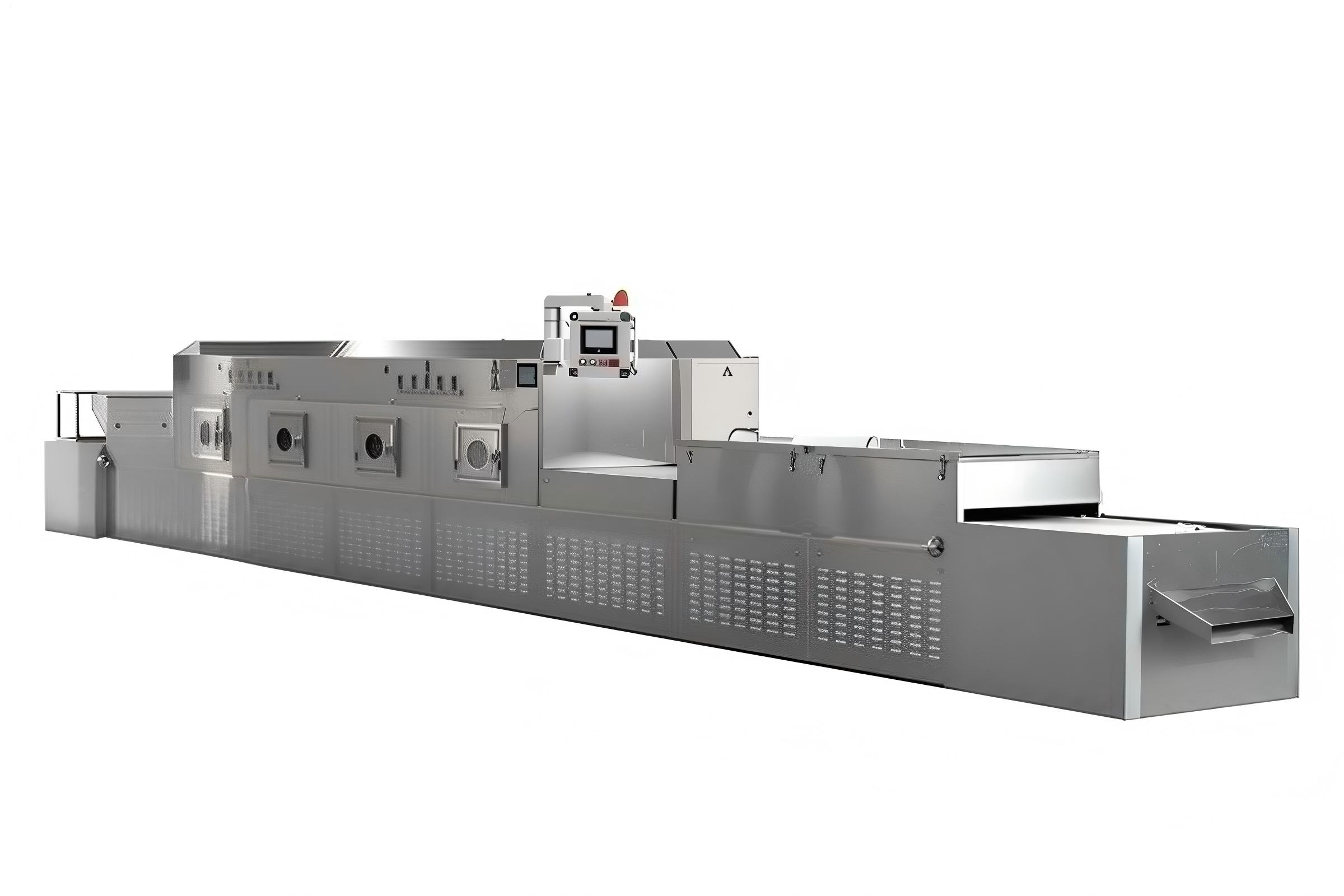
Microwave drying technology, with its core advantages of rapid heating, uniform dehydration, high efficiency, energy saving, and preservation of active ingredients, is widely used in food processing, especially for heat-sensitive and easily oxidized food materials. Below are specific scenarios illustrating its applications and critical roles:
I. Typical Application Scenarios and Examples
1. Fruits and Vegetables: Dehydration, Preservation, and Quality Enhancement
Scenarios: Dried vegetables (e.g., shiitake mushrooms, black fungus, carrots), dried fruits (e.g., apples, strawberries, mangoes), and dehydrated vegetables (e.g., instant noodle toppings).
Examples:
Shiitake Drying: Traditional hot-air drying takes 8–12 hours, often causing cap cracking, gill darkening, and severe loss of B vitamins. Microwave drying (5–10 kW power) requires only 2–4 hours. Electromagnetic waves penetrate the material, enabling synchronous dehydration from inside out, resulting in intact shiitake with golden color. The retention rates of umami substances (e.g., guanylate) and B vitamins are 20%–30% higher than hot-air drying.
Strawberry Drying: Strawberries are rich in anthocyanins (heat-sensitive pigments). Traditional drying causes fading and softening due to prolonged high temperatures. Microwave-vacuum combined drying (3 kW microwave + 0.08 MPa vacuum) achieves rapid dehydration at 40–50°C, with anthocyanin retention exceeding 85%. The rehydrated product closely resembles fresh strawberries in texture and color.
Shortens drying cycles (50%–70% efficiency improvement), reduces nutrient loss, and preserves shape and flavor.
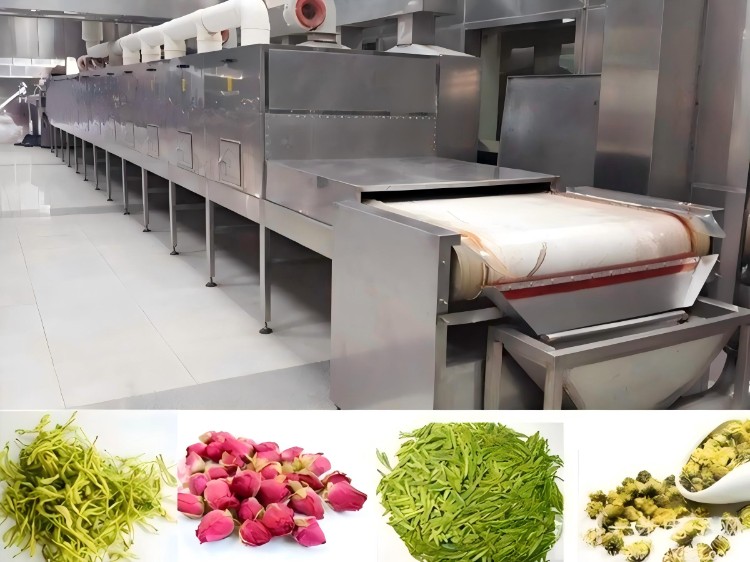
2. Tea Processing: Fixation, Shaping, and Aroma Locking
Scenarios: Green tea fixation, oolong tea drying, post-pile drying of Pu-erh tea, and dehydration of herbal teas (e.g., chrysanthemum, rose).
Green Tea Microwave Fixation: Green tea requires rapid inactivation of polyphenol oxidase (PPO) to retain its green color. Traditional pan-firing takes 5–8 minutes, often leading to scorched edges and insufficient aroma. Microwave fixation (2450 MHz frequency, 8–12 kW power) raises leaf temperature to 80–90°C in 30–60 seconds, instantly inhibiting PPO activity. Chlorophyll retention exceeds 90%, while aromatic compounds (e.g., linalool) are enhanced, yielding bright green tea liquor with a rich chestnut aroma.
Chrysanthemum Drying: Hangbai chrysanthemums need low-temperature slow drying to preserve petal expansion and flavonoid activity. Microwave drying (2–4 kW power) completes the process in 3–5 hours, with intact, non-sticky petals. Flavonoid content is 15% higher than sun-drying, with no dust contamination.
Enables precise temperature control (avoiding overheating), accelerates enzyme inactivation/solidification, locks in volatile aromas, and improves appearance and quality.
3. Grains and Legumes: Mold Prevention, Quality Assurance, and Energy Saving
Scenarios: Post-harvest drying of grains (rice, wheat, corn) and legumes (soybeans, mung beans, red beans) for storage.
Examples:
Rice Drying: Rice is prone to mold in rainy seasons. Traditional hot-air drying (50–60°C) takes 10–12 hours, with high energy consumption and surface cracking (broken grains). Microwave drying (10–15 kW power) reduces moisture from 25% to the safe 14% in 4–6 hours. Strong penetration enables synchronous heating inside and out, lowering the cracking rate to <5% (vs. ~15% for traditional methods) and reducing energy use by 40%.
Mung Bean Drying: Mung beans contain starch and protein; traditional drying causes local overheating and protein denaturation, reducing rehydration. Microwave drying (3–5 kW power) gently dehydrates beans, controlling starch gelatinization and preserving a texture close to fresh beans after rehydration.
Emergency drying in rainy weather, reducing mold risk, minimizing cracking/nutrient denaturation, and saving energy/costs.
4. Meat, Poultry, and Aquatic Products: Efficient Dehydration and Antimicrobial Effects
Scenarios: Dried meats (beef jerky, pork slices), fish (cod jerky, shrimp), and egg products (egg yolk powder, albumin powder).
Examples:
Beef Jerky Drying: Beef requires dehydration to ≤20% moisture for shelf life. Traditional hot-air drying (60–70°C) takes 8–10 hours, resulting in tough meat and excessive muscle fiber contraction. Microwave drying (6–8 kW power) with segmented temperature control (high power for rapid dehydration, low power for shaping) achieves the target in 4–5 hours. The loose muscle fiber structure remains soft and elastic after rehydration. Additionally, microwave’s non-thermal effect (electromagnetic fields disrupting microbial cell membranes) synergistically kills pathogens like E. coli, eliminating the need for extra preservatives.
Shrimp Drying: Shrimp are rich in unsaturated fatty acids (prone to oxidation). Traditional sun-drying takes 2–3 days, risking dust and insect contamination. Microwave drying (4–6 kW power) completes the process in 2–3 hours, yielding bright red shrimp with no fishy odor. The peroxide value (lipid oxidation indicator) is 40% lower than sun-drying.
Rapid dehydration inhibits microbes, preserves protein/fat activity, improves texture, and extends shelf life.
5. Specialty Foods: Medicinal-Food Homology and Functional Ingredient Retention
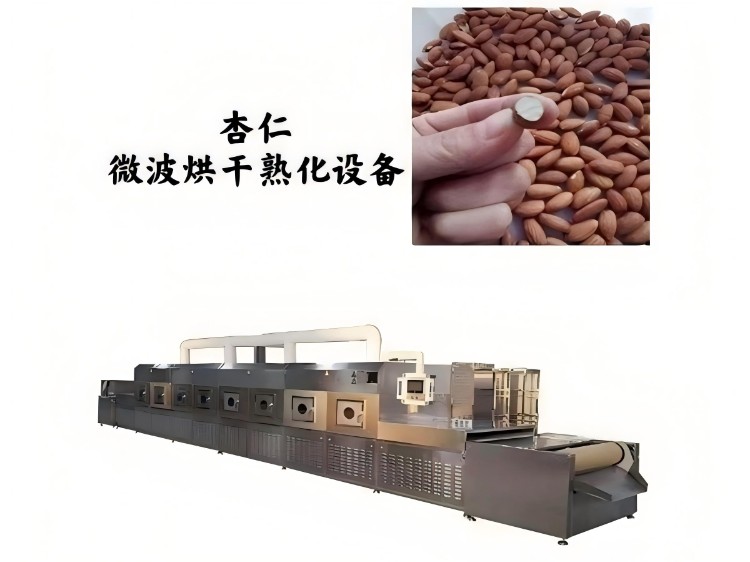
Scenarios: Chinese herbs (goji berries, red dates, astragalus slices), functional foods (probiotic powder, fruit/vegetable powder), and convenience foods (dehydrated soup mixes).
Goji Berry Drying: Goji berries contain polysaccharides (immune-regulating active ingredients). Traditional drying (60°C hot air) takes 12–15 hours, with a 30% polysaccharide loss. Microwave drying (2–3 kW power) completes the process in 5–6 hours, retaining >85% of polysaccharides with plump, non-wrinkled berries.
Probiotic Powder Drying: Probiotics (e.g., lactic acid bacteria) require low-temperature dehydration to retain viability. Microwave-vacuum drying (35–40°C, 0.09 MPa vacuum) reduces moisture to <3% in 2–3 hours, with a probiotic survival rate exceeding 90% (freeze-drying is costly and time-consuming despite higher activity).
Protects heat-sensitive active ingredients (polysaccharides, probiotics, vitamins) and meets quality demands for functional foods.
High Efficiency and Energy Savings, Boosting Productivity
Microwaves directly act on material molecules (frictional heat from polar molecules), with an energy utilization rate exceeding 80% (vs. 30%–40% for hot-air drying). Drying time is reduced by 50%–80%, significantly lowering unit energy consumption (e.g., 40% less energy for grain drying).
Uniform Dehydration, Ensuring Consistent Quality
Electromagnetic waves penetrate tens of centimeters (depending on dielectric constant), enabling simultaneous internal and external heating. This avoids issues like “dry exterior, wet interior” or “surface crusting” in traditional drying, ensuring uniform moisture distribution (deviation ≤1%) and stable product quality.
Preserving Active Ingredients, Enhancing Nutritional Value
Short heating times (most scenarios <6 hours) reduce oxidation/decomposition of heat-sensitive substances (vitamin C, anthocyanins, polysaccharides, probiotics). Nutrient retention is 20%–50% higher than traditional methods, aligning with consumer demand for “natural, healthy” foods.
Antimicrobial and Antiseptic Effects, Extending Shelf Life
The synergistic effect of thermal (heating to 60–80°C) and non-thermal effects (electromagnetic fields damaging microbial DNA/membranes) kills >99% of bacteria and molds (e.g., E. coli, Aspergillus flavus), extending shelf life without excessive preservatives.
Flexible Adaptation to Diverse Materials
By adjusting microwave power, frequency, and drying time, the technology adapts to various shapes (particles, flakes, blocks) and initial moisture levels (10%–80%), ideal for small-batch, multi-variety flexible production.
Microwave drying technology has evolved from an “auxiliary method” to a “core process” in food processing. In high-value sectors like fruits/vegetables, tea, grains, and meat/poultry, its efficient, high-quality, and energy-saving drying process meets industrial efficiency needs while preserving natural food quality and nutritional activity, making it a key driver of food processing industry upgrading.
 RELATED
 RELATED
 RELATED
 RELATED
Copyright By © Shandong Shine Machinery Co.,Ltd
 ไทย
ไทย Indonesia
 Melayu
 Tiếng Việt
 Pусский
 Portugues
 Français
 Deutsch
 日本語
日本語 한국어
한국어 العربية
 Italiano
 Polski
 Nederlands
 Türk dili
 हिन्दी
 Ελληνικά
 Svenska
 Español