Product Introduction
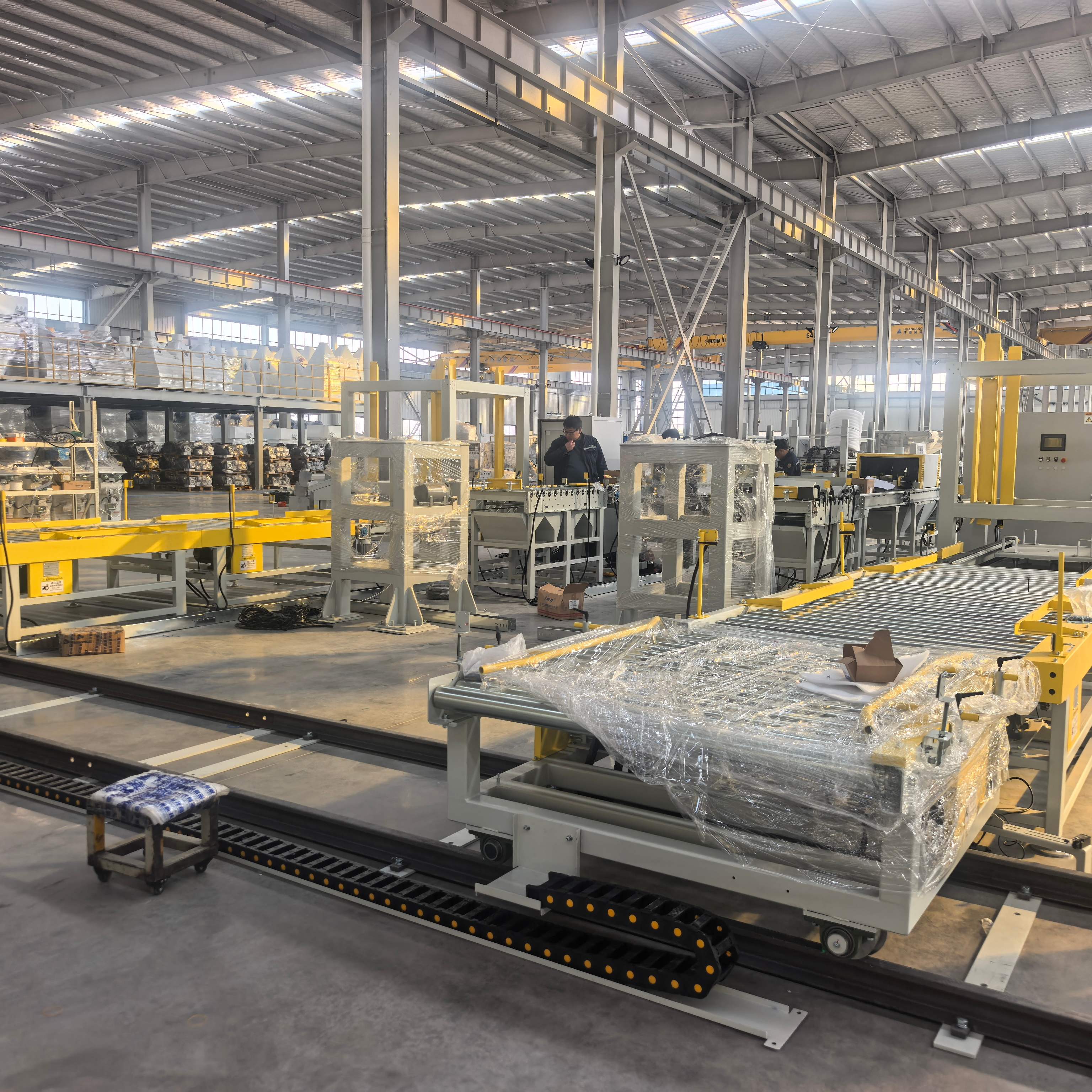
The Gypsum Mixing Mortar Production Line is a fully automated dry-mix processing system engineered for the large-scale production of gypsum-based mortars, including lightweight plastering gypsum, heavy plastering gypsum, gypsum self-leveling mortar, and gypsum board joint compound. It precisely combines β-hemihydrate gypsum powder with aggregates, fillers, and functional additives according to programmed formulas, delivering consistent, ready-to-use dry mortar through a closed, dust-controlled workflow.
The market context reinforces the significance of this equipment category. The global gypsum-based mortar dry mix mortar market was valued at USD 8,447.2 million in 2025 and is projected to reach USD 12,974.2 million by 2033, growing at a CAGR of 4.81% from 2026 to 2033. Asia Pacific accounted for the largest revenue share in 2025, reflecting sustained construction activity and the shift toward factory-prepared dry mortars in the region. For manufacturers seeking to enter or expand within this market, the production line provides the precision, throughput, and product flexibility required to compete at scale.
Product Features
1. Dual-Stage Precision Batching with Micro-Additive Accuracy
The production line employs a multi-tier weighing architecture: coarse aggregate and powder scales handle the bulk gypsum, sand, and calcium carbonate streams, while a dedicated high-precision micro-additive weighing scale manages retarders, water-retention agents, and other functional additives. Main material metering accuracy reaches ≤ ±1%, and micro-additive accuracy achieves ≤ ±0.3%. The system supports formula storage and one-key switching, enabling rapid changeover between lightweight plaster, heavy plaster, self-leveling mortar, and joint compound without extended recalibration.-24
2. Gentle Twin-Shaft Non-Gravity Mixing for Delicate Aggregates
Gypsum mortars present a specific processing challenge: expanded perlite and glazed hollow beads—critical for lightweight plastering gypsum—are fragile and prone to breakage under aggressive mixing. The line addresses this with a twin-shaft non-gravity paddle mixer that creates three-dimensional convection, shear, and diffusion mixing in a near-weightless state. Mixing uniformity reaches ≥ 98%, with a complete batch cycle of 30 to 60 seconds on high-efficiency configurations, or 2 to 4 minutes for formulations requiring extended blending. The gentle action preserves the structural integrity of lightweight aggregates, ensuring the finished mortar delivers its specified thermal and yield properties.-1-24-27
3. Anti-Segregation Design for Consistent Finished Product
Lightweight gypsum plaster is particularly susceptible to segregation between density-differentiated components during storage and discharge. The production line incorporates a finished product buffer silo with an integrated anti-segregation device that reduces discharge velocity and prevents the separation of light and heavy constituents. This design safeguard is essential for maintaining batch-to-batch homogeneity from the mixer through to the packaging line.-27
4. Fully Automated PLC Control with Diagnostic Capabilities
A centralized PLC + HMI control system governs the entire production sequence—from silo discharge and weighing through mixing, buffering, and packaging. The system provides formula management, one-key switching, production data logging, fault self-diagnosis, and alarm functions. Automatic fall correction and over-tolerance alarms stabilize formula execution, while the touch-screen interface reduces operator dependence and shortens the learning curve for new production staff.-1-24
5. Closed-Loop Dust Control and Clean Production Environment
Gypsum powder is fine and airborne, making dust containment a core design requirement. The line operates under fully enclosed negative pressure, with pulse-jet bag dust collectors deployed at multiple points—silo tops, transfer points, mixing, and packaging—to suppress dust at the source. Screw conveyors, bucket elevators, and pneumatic lines for fragile aggregates are sealed throughout the material flow path, achieving a clean working environment that meets modern industrial hygiene expectations.-24-27
6. Flexible Packaging and Discharge Configurations
The packaging module accommodates valve bags (typically 25 kg), ton bags, and bulk discharge configurations to match different dispatch models. Valve bag packing accuracy exceeds 0.5%, and the system can be extended with automatic bag placing, sewing, belt conveying, and palletizing equipment for higher-throughput operations. Finished product silos in the 50 to 200-ton range provide buffer capacity for flexible scheduling.-1-24
7. Configurable Capacity for Diverse Production Scales
The production line is available in models spanning 10 to 30 tons per hour, with annual output capacities from 50,000 to 300,000 tons and total installed power of 75 to 160 kW. Compact configurations serve regional manufacturers or product-development batches, while higher-capacity tower or stepped-layout systems support national and export-oriented dry mix producers. The line can be directly integrated with an upstream gypsum calcination line, with calcined powder conveyed pneumatically into storage silos—eliminating intermediate packaging and unpacking steps.-24-27
Product Applications
The Gypsum Mixing Mortar Production Line is engineered around the formulation and production requirements of gypsum-based dry-mixed mortars. Its primary product applications include:
Lightweight Plastering Gypsum. The line’s gentle mixing and anti-segregation design are specifically suited to formulations containing expanded perlite or glazed hollow beads, where aggregate integrity directly determines the mortar’s yield, thermal performance, and surface workability.
Heavy Plastering Gypsum. For denser formulations without lightweight aggregates, the production line maintains batching precision and mixing uniformity across higher-bulk-density recipes, supporting consistent setting behavior and compressive strength development.
Gypsum Self-Leveling Mortar. Self-leveling compounds demand strict control over particle distribution, flow characteristics, and additive dispersion. The high-accuracy micro-additive weighing and homogeneous mixing action of the line support the reproducibility required for floor underlayment applications.
Gypsum Board Joint Compound. The line is compatible with the production of joint compound for drywall finishing. Finished joint compound for seam filling and leveling is subject to defined performance requirements under standards such as JC/T 2075-2011, which specifies terminology, materials, requirements, test methods, and inspection rules for gypsum-based caulking materials used in gypsum board construction. The production line’s batching accuracy and mixing consistency provide a reliable process foundation for meeting these product-quality expectations.-26
Beyond these core categories, the same equipment platform can be adapted to produce gypsum-based putty, bonding plaster, and other specialty dry mortars, provided the mixing and packaging systems are configured for the target formulation’s density, aggregate fragility, and changeover frequency. This product flexibility allows manufacturers to utilize a single production asset across multiple gypsum mortar categories, responding to regional construction demand without duplicating capital investment.-27
Copyright By © Shandong Shine Machinery Co.,Ltd
 ไทย
 Indonesia
 Melayu
 Tiếng Việt
 Pусский
 Portugues
 Français
 Deutsch
 日本語
 한국어
 العربية
 Italiano
 Polski
 Nederlands
 Türk dili
 हिन्दी
 Ελληνικά
 Svenska
 Español