For plywood and veneer mills, the real test of a veneer dryer often appears when orders change: one batch may require thin face veneer, while the next may involve thicker core veneer with different incoming moisture. In that situation, a machine is not judged only by rated capacity. Buyers increasingly look at thickness adaptability, moisture control, heat source options, and how easily production settings can be adjusted when wood species or veneer thickness changes.
A veneer dryer that performs well on one standard product may still struggle when a mill frequently switches between veneer grades, thicknesses, and moisture conditions. Thin veneer can be more sensitive to over-drying, curling, cracking, or handling damage. Thicker veneer needs enough heat transfer and dwell time to reduce moisture more evenly through the sheet.
Shine Machinery product pages list veneer thickness ranges such as 0.8–8mm for several roller dryer configurations, with working widths commonly described from 3m to 6m on selected models. For buyers comparing a China veneer dryer manufacturer, that range is important because it shows whether the equipment line is designed around mixed production rather than a single narrow product type.
Still, thickness range should never be treated as a stand-alone buying point. The practical question is: can the dryer’s operating parameters be adjusted according to veneer thickness, incoming moisture, size, and production capacity requirements? Shine Machinery’s roller veneer drying information describes automatic electric control, frequency conversion, and automatic adjustment of transmission speed and temperature according to veneer thickness and moisture content.
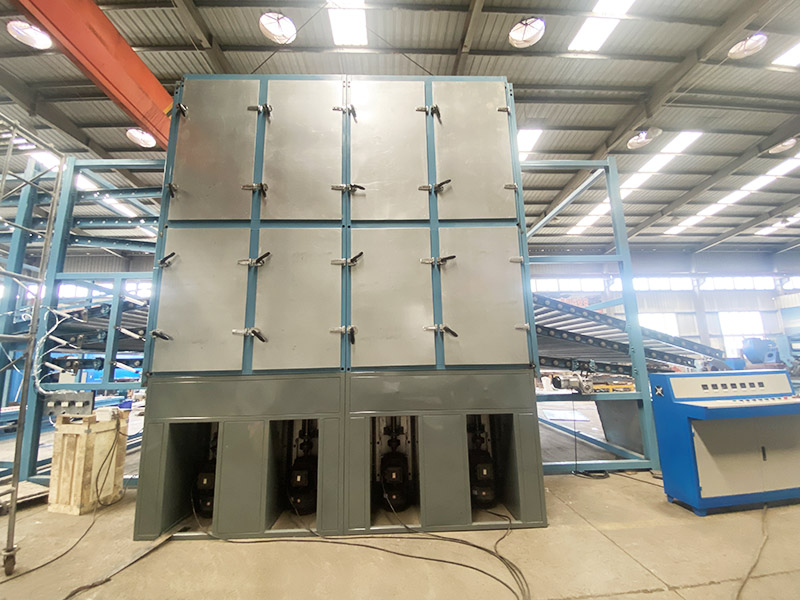
Industry studies show that wood species, sheet thickness, airflow, temperature, and initial moisture content all influence veneer drying results. When a mill changes from one species or thickness to another, operators usually need to adjust the drying process instead of relying on one fixed setting.
This is where a Veneer Dryer should be evaluated as a process tool, not just a steel structure. The dryer must support practical changes in speed, temperature, heat source selection, deck design, and line layout. Shine Machinery product information describes configurations for roller veneer dryers, core veneer drying machines, 6-deck veneer dryers, and veneer dryer lines, with moisture reduction commonly described from fresh veneer to about 0–15% or about 8–10% on selected models.
For mills handling frequent changeovers, buyers should ask three direct questions before choosing equipment:
Can speed and temperature be adjusted for different veneer thicknesses and moisture levels?
Is the working width suitable for the mill’s common sheet sizes?
Does the supplier offer deck and line configuration options that match the plant’s real production mix?
A roller veneer dryer is often selected for core veneer and production environments where continuous transport, stable feeding, and controlled drying are important. Shine Machinery describes roller veneer dryer systems using upper and lower rollers, hot air circulation, frequency conversion speed regulation, and adjustable drying temperatures on selected models.
The company’s product pages also describe dryers with automatic veneer feeding and automatic collection systems, which can help reduce manual handling in a continuous veneer drying line. For mixed orders, this matters because changeover efficiency is not only about drying temperature. It also depends on whether the line can move veneer smoothly, reduce interruptions, and keep moisture output more consistent batch after batch.
| Product configuration | Selected listed details | Buyer relevance |
|---|---|---|
| Fully automatic conveyor veneer dryer | Working width 3–6m, veneer thickness 0.8–8mm, fresh veneer to about 0–15% | Suitable for buyers comparing automation and flexible sizing |
| High efficiency 6 deck veneer dryer | Working width 3–6m, veneer thickness 0.8–8mm, biomass, thermal oil, steam, or natural gas heat source options | Useful where capacity and heat source flexibility are key concerns |
| Veneer dryer line | 3m working width, 0.8–8mm veneer thickness, fresh veneer to about 8–10% on listed model | Relevant for continuous industrial drying layouts |
| Core veneer drying machine | 1, 2, or 4 deck designs described for different requirements | Relevant for core veneer and plywood production planning |
Heat source selection is one of the first items buyers compare when evaluating a China veneer dryer supplier. Shine Machinery pages describe heat source options including Biomass Burner, thermal oil, steam, and natural gas on selected dryer configurations.

The biomass burner veneer dryer page describes the use of crushed wood waste and tree bark as fuel. It also lists adjustable drying temperature ranges such as 140–200°C on specific models and notes automatic temperature control and speed regulation for consistent moisture content. For mills that generate wood waste during peeling or processing, this type of heat source can be an important factor in operating cost evaluation, provided the buyer matches the burner and dryer configuration to local fuel conditions and production requirements.
Floor space, capacity target, and veneer size all influence dryer selection. Shine Machinery product information includes 1-deck, 2-deck, 4-deck, and 6-deck veneer dryer configurations across its product pages. The 2-deck machine is described as helping save area and improve working capacity, while high-capacity lines may use more decks depending on buyer requirements.
For a mill that frequently switches orders, more decks do not automatically solve every drying problem. The right choice depends on veneer size, thickness, moisture, desired daily output, heat source, and workshop layout. A practical evaluation should combine line capacity with moisture uniformity, drying cost, maintenance access, and the ability to adjust settings during production.
Before purchasing from a China top veneer dryer factory or comparing suppliers across China, buyers should move beyond brochure capacity and ask for a configuration discussion around their real production conditions. The following checklist is a useful starting point:
List the minimum and maximum veneer thickness used in daily production.
Separate thin face veneer and thicker core veneer requirements.
Record typical incoming moisture and target final moisture.
Confirm whether working width should be 3m, wider, or customized.
Ask how speed and temperature are adjusted during species or thickness changeovers.
Compare heat source options against local fuel, steam, thermal oil, or natural gas conditions.
Review whether automatic feeding and collection are suitable for the plant’s labor model.
Shandong Shine Machinery Co., Ltd presents itself through www.veneersdryer.com with multiple veneer dryer configurations, including roller dryer systems, core veneer drying machines, biomass burner dryers, and multi-deck veneer dryer lines. For international buyers, the strongest purchasing decision comes from matching these listed specifications to actual veneer type, order mix, moisture target, plant layout, and energy conditions.
No fixed setting should be expected to suit every wood species or thickness. Wood species and veneer thickness affect drying behavior, so operators should adjust speed, temperature, and related process parameters according to production conditions.
Several Shine Machinery product pages list veneer thickness ranges such as 0.8–8mm for selected roller veneer dryer and multi-deck dryer configurations.
Selected Shine Machinery pages describe drying fresh veneer to about 0–15%, while some listed models describe output moisture of about 8–10%.
Product pages mention biomass burner options, and selected configurations also list thermal oil, steam, and natural gas as heat source options.
Buyers should confirm veneer thickness range, working width, target moisture, heat source, deck configuration, automation level, and whether speed and temperature control can match their real production changeovers.
Copyright By © Shandong Shine Machinery Co.,Ltd
 ไทย
ไทย Indonesia
 Melayu
 Tiếng Việt
 Pусский
 Portugues
 Français
 Deutsch
 日本語
日本語 한국어
한국어 العربية
 Italiano
 Polski
 Nederlands
 Türk dili
 हिन्दी
 Ελληνικά
 Svenska
 Español


