For plywood, furniture, and flooring producers, natural sun drying can look like the safest way to reduce initial investment. The yard is already there, sunlight costs nothing, and the process feels familiar. Yet the real cost often appears later: uneven veneer, cracks, curling, slower delivery, extra handling, and inventory that sits too long before it can become saleable panels. A modern veneer dryer is not simply a machine purchase; for many mills, it is a way to control quality, stabilize production rhythm, and reduce the hidden losses created by weather-dependent drying.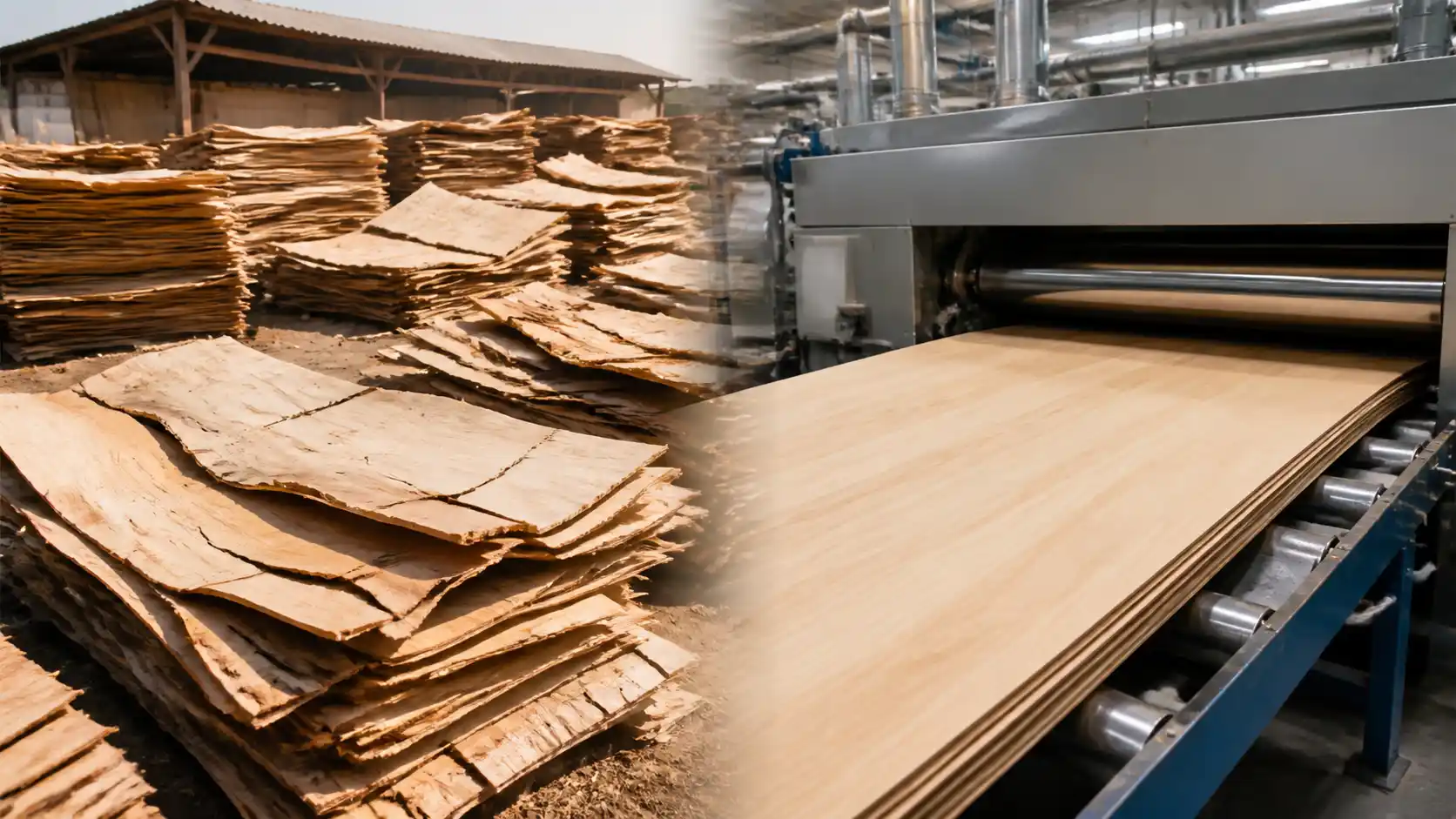
Natural drying is attractive because it reduces upfront equipment spending. However, veneer production does not end when moisture leaves the sheet. Buyers care about flatness, dimensional stability, surface quality, and whether the veneer can move smoothly into the next production stage. Shine Machinery has noted that sun-dried veneers may suffer from poor flatness and dimensional instability when temperature and moisture conditions are not controlled. Veneers can warp, curl, or crack unevenly, which may reduce finished product quality and increase material waste.
The problem becomes more serious when production must meet stable delivery schedules. Sun drying requires a longer drying period, and output is exposed to seasonal weather, yard space, and labor availability. Even when the direct energy cost appears low, the factory may pay through slower inventory turnover, lower selling prices for poorer boards, and more uncertainty in order fulfillment.
A cracked or curled sheet is not only a quality defect. It is also tied-up capital. Each sheet waiting for sorting, re-drying, trimming, or downgraded sale occupies storage space and delays cash recovery. In high-volume plywood production, this can turn a “low-cost” drying method into a bottleneck.
Research in the veneer and plywood industry also shows why drying control matters. Veneer moisture content and thickness naturally vary, making consistent drying difficult. If the drying schedule is not suited to the veneer type, defects and waste can increase. Excessive drying may also affect bonding performance in plywood manufacturing. For procurement teams, the conclusion is practical: veneer drying should be evaluated by total production cost, not by fuel or equipment price alone.
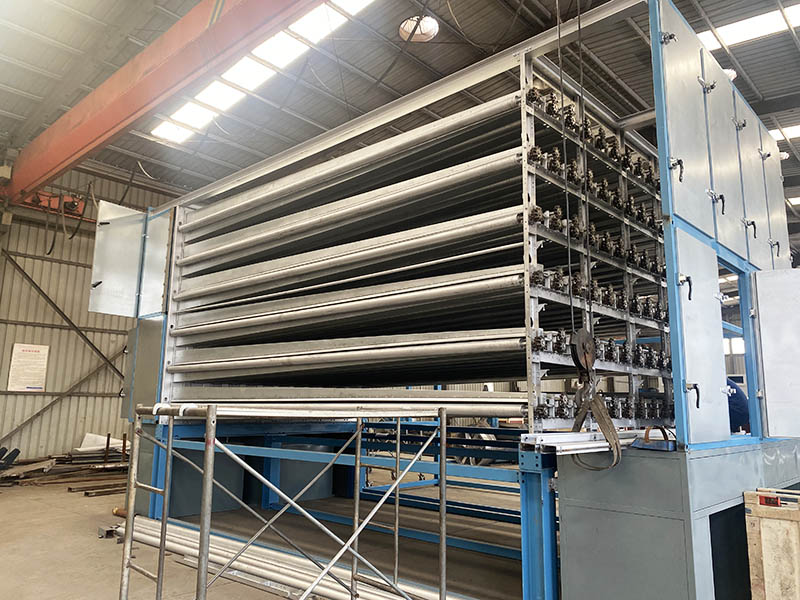
A controlled veneer roller dryer gives mills a more predictable path from fresh veneer to usable material. Shine Machinery’s roller veneer dryer adopts hot air circulation technology and a precision control system, helping dry veneers quickly and evenly while supporting veneer quality and stability. The equipment can be customized according to production requirements, including working width options that match different panel dimensions.
On the shop floor, controlled drying helps factories move away from weather dependency. Instead of waiting for sunlight and yard conditions, mills can plan drying around production demand. This improves scheduling for peeling, drying, gluing, pressing, and finished board delivery. For buyers comparing a China veneer dryer manufacturer or China veneer dryer supplier, this type of process stability is often as important as the machine price.
Evaluation Point
Natural Sun Drying
Controlled Veneer Dryer
Initial investment | Lower equipment spending | Requires equipment investment |
Drying cycle | Longer and weather-dependent | Shortened through machine drying |
Veneer flatness | More risk of uneven flatness | Designed for more stable drying results |
Defect risk | Warping, curling, cracking may occur | Process control supports defect reduction |
Inventory turnover | Slower when drying periods extend | Easier to align with production schedules |
Selling value | Lower-quality veneers may sell for less | More consistent quality supports stronger downstream use |
This comparison does not mean every factory should select the same configuration. Veneer species, thickness, initial moisture, daily output, fuel access, and workshop layout all affect the right choice. What really matters is how many hidden costs are being accepted in exchange for avoiding initial investment.
For mills with wood waste, bark, and offcuts, heat source selection becomes a major part of the drying decision. Shine Machinery’s Biomass Burner Veneer Dryer can directly use crushed wood waste and tree bark as fuel to provide hot air to the veneer dryer. This approach eliminates the need to purchase a steam boiler or thermal oil heater for that configuration and is positioned as an energy-saving, environmentally friendly drying solution.

The product information also describes automatic temperature control and speed regulation for consistent moisture content, with drying section temperature controlled in the 140–180°C range and temperature accuracy of ±5°C. For a mill comparing sun drying with machine drying, these details shift the discussion from “machine cost” to “process control, fuel use, and recovery time.”
Shandong Shine Machinery Co., Ltd, also known as Shine Machinery, provides veneer drying solutions through www.veneersdryer.com. The company’s product range includes single deck, 2 deck, 3 deck, 4 deck, and 6 deck veneer dryer categories, as well as matching products such as automatic veneer feeders, automatic veneer collection systems, wood crushers, and knife grinder machines. Its site also offers an Estimate Earnings page, where buyers can provide site size, labor cost, and local electricity price so engineers can help estimate cost recovery time and expected revenue.
For buyers searching for a China top veneer dryer factory, the most useful purchasing question is not “What is the cheapest drying method today?” It is “Which drying method protects veneer value, reduces rework, and keeps inventory moving?” A low-investment yard can become expensive if cracked veneer, unstable quality, and slow turnover become normal operating costs.
Before selecting a Veneer Production Line upgrade or standalone drying equipment, mills should review several points:
Current drying time during dry, rainy, and cold seasons
Percentage of veneer downgraded due to cracking, curling, or poor flatness
Yard area occupied by drying inventory
Labor used for handling, sorting, and re-drying
Fuel options, including wood waste and bark
Required working width, veneer thickness range, and target output
Cost recovery expectations based on local energy and labor costs
Once mills run the numbers, many discover that the most expensive drying method is not the one with the higher initial price. It is the method that keeps defects, delays, and inventory pressure hidden inside daily production.
No. Sun drying can reduce upfront investment and may save energy in certain conditions. The issue is consistency. When veneer flatness, moisture stability, delivery speed, and selling value matter, natural drying can create hidden costs.
Sun-dried veneers may suffer from poor flatness, warping, curling, cracking, and dimensional instability. These problems can reduce finished product quality and may lead to lower selling prices or more waste.
A roller veneer dryer supports controlled, continuous drying through hot air circulation and process regulation. It helps factories shorten drying periods, improve production scheduling, and reduce dependence on weather.
Yes. Shine Machinery’s biomass burner veneer dryer can use crushed wood waste and tree bark as fuel to provide hot air, offering a practical option for mills that generate suitable wood residues.
Buyers should compare equipment investment with current losses from slow drying, defects, re-drying, labor, yard space, fuel, and inventory turnover. Shine Machinery provides an Estimate Earnings service for this type of calculation.
Copyright By © Shandong Shine Machinery Co.,Ltd
 ไทย
ไทย Indonesia
 Melayu
 Tiếng Việt
 Pусский
 Portugues
 Français
 Deutsch
 日本語
日本語 한국어
한국어 العربية
 Italiano
 Polski
 Nederlands
 Türk dili
 हिन्दी
 Ελληνικά
 Svenska
 Español


