In plywood veneer drying, the smartest investment is often the one that meets the actual moisture target—no more, no less. If your process only requires fresh veneer dried to within 20% moisture, specifying a deep-drying setup designed for 0–5% can raise capital cost, complexity, and operating expectations without improving your downstream results. This is where a correctly configured Vertical Veneer Dryer can be a practical, procurement-friendly choice for Drying Veneer.

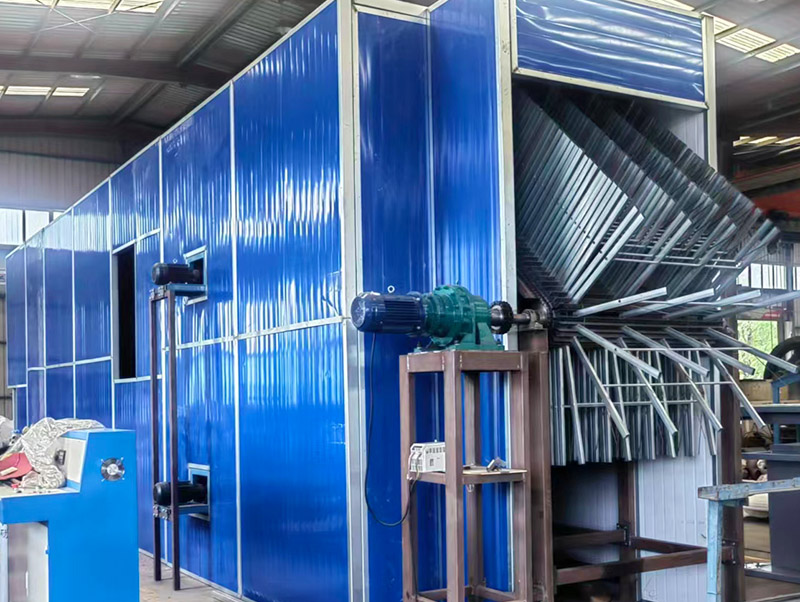
Moisture content is not just a lab number—it drives equipment selection, layout, and operating assumptions across an entire Veneer Drying System. Buyers typically start by asking “What moisture content do we need at the end?” because that single requirement influences:
The dryer configuration and model selection
Expected throughput (m³/h)
Installed power and utilities planning
Labor planning (operators per shift)
Whether vertical drying or roller drying is a better fit for the veneer condition you need
Shine Machinery publishes two vertical configurations with clearly stated moisture targets:
FBH30-20: fresh veneer dried to within 20%
FBH30-13: fresh veneer dried to 0–5%
In procurement terms, these two targets represent different end-use needs. The key is aligning the veneer dryer machine to your line’s requirement, rather than defaulting to the lowest achievable moisture content.
For buyers comparing a Vertical Veneer Dryer configured for within 20% moisture versus one designed for deeper drying, published parameters help keep discussions concrete.
| Parameter | FBH30-20 | FBH30-13 |
|---|---|---|
| Moisture content target | Fresh veneer to within 20% | Fresh veneer dried to 0–5% |
| Output (m³/h) | 1.2–1.5 | 2 |
| Machine size (L×W×H, m) | 20×7×4 | 13×3×4 |
| Total power (kW) | 36.3 | 15 |
| Fuel consumption (kg/h) | — | 200 |
| Labor (workers) | 3 | — |
Two practical takeaways are worth noting for plywood veneer drying planning:
A higher final moisture target does not automatically imply smaller equipment or lower installed power in every case. Comparing only “20% vs 0–5%” is incomplete—you still need to evaluate output, configuration, and site conditions.
Output and footprint can move in different directions depending on the model. Buyers should benchmark their own required throughput before selecting a veneer dryer machine.
A vertical veneer drying machine is described as main equipment in plywood production, and it is composed of four operating parts: Feeding area, Heating area, Cooling area, and Discharging area.

In Shine Machinery’s descriptions, the vertical tunnel-type core veneer dryer is mainly used for drying core plate, partial surface, and bottom plate. It is also described as suitable for veneers with low flatness requirements, and suitable for a production process of cutting first and then drying, especially for drying thick veneers.
For readers comparing dryer styles, this positioning matters: a Vertical Veneer Dryer can be evaluated as a Low Cost Veneer Dryer option when the application is primarily core-layer work and the process does not require the same veneer flatness outcomes emphasized by roller designs.
To explore the vertical product family referenced in this article, see the catalog page: Vertical Veneer Dryer.
When procurement teams shortlist a veneer dryer machine, the “headline” numbers usually include operating cost, loading efficiency, and footprint.
Shine Machinery’s published vertical drying claims focus on three areas:
Drying cost: stated as less than $8/m³, and described as 30–60% of the drying cost of other dryers in its comparison.
Loading capacity: the vertical plywood method is described as increasing veneer loading capacity by 30–80% compared with other dryers.
Footprint and installation: the vertical equipment is described as covering a small area, noted as about two-thirds of the roller dryer, and needing to be assembled on the customer’s factory site so it can be installed according to location requirements.
These points tend to matter most when the moisture target is “within 20%,” because buyers often want a Veneer Drying System that is efficient and practical without paying for deep-drying capability they don’t plan to use.
For a model configured specifically around the within-20% target, see: Vertical Plywood Veneer.
Drying method decisions in plywood veneer drying typically come down to the veneer condition you need after drying and the constraints of the production line.
Shine Machinery describes its roller dryer option with a different performance emphasis. The Roller Core Veneer Dryer Machine is described as having uniform moisture content, veneer that is flat without buckle or end waviness, veneer that is free of splits, and a surface condition described as good for gluing. It is also described as being equipped with an automatic control system and adopting frequency conversion to adjust transmission speed and temperature automatically.
In other words, roller drying is positioned around veneer condition outcomes and automation-related operating convenience—while vertical drying is positioned as a compact, cost-conscious approach for core-related applications.
For the roller configuration referenced above, see: roller core veneer dryer machine.
If your objective is Drying Veneer to within 20% moisture, selection tends to be smoother when the buyer defines boundaries early. Here is a procurement-oriented checklist based on the product descriptions and parameters shown above:
Confirm the target moisture content
If the process is specified as fresh veneer to within 20%, focus on configurations documented for that target.
Identify veneer type and process sequence
Vertical drying is described as suitable for cutting first and then drying, and for thick veneers and applications with low flatness requirements.
Match capacity to line needs
FBH30-20 lists 1.2–1.5 m³/h capacity; FBH30-13 lists 2 m³/h. Use these as reference points to avoid sizing mismatches.
Plan installation approach and site constraints
Vertical equipment is described as assembled on-site and installed according to location requirements—relevant for factories where space and access drive layout choices.
Review labor and utilities
FBH30-20 lists 3 workers, and another vertical configuration description notes 2 workers per shift. Buyers should confirm staffing expectations as part of the Veneer Drying System plan.
For buyers comparing a deeper-drying vertical option, see: Wood Vertical Veneer Drying.
In many RFQs, “low cost” is shorthand for a mix of purchase cost, operating cost, and line stability. Shine Machinery also presents a separate Low Cost Veneer Dryer Machine listing as a roller veneer dryer with the following stated parameters:
Working width: 3 m
Veneer thickness: 0.8–8 mm
Heating area length: 32 m
Drying capacity: 50–60 m³/day
Heat source: Biomass burner (other options available)
This kind of listing can be useful when buyers are comparing a Low Cost Veneer Dryer path that still uses roller-style conveying.
For plywood veneer drying projects where “within 20% moisture” is enough, the most economical Veneer Drying System is often the one that stays aligned with that requirement. A Vertical Veneer Dryer configured for fresh veneer to within 20% moisture can be evaluated as a focused solution—especially where thick core veneers, compact installation, and cost-focused Drying Veneer operation are priorities.
To review models and specifications directly, visit www.veneersdryer.com.
It means the veneer dryer machine should be configured to reach that target reliably, instead of being specified for deeper drying levels that the line does not require.
The FBH30-20 is listed with a moisture content target of fresh veneer dried to within 20%.
The FBH30-13 is listed with a moisture content target of fresh veneer dried to 0–5%.
Four parts are described: Feeding area, Heating area, Cooling area, and Discharging area.
It is described as mainly used for drying core plate, partial surface, and bottom plate, and as suitable for cutting-first, drying-later processes—especially for thick veneers.
It is described as producing uniform moisture content, flat veneer without buckle or end waviness, veneer free of splits, and having automatic control with frequency conversion for adjusting speed and temperature.
Copyright By © Shandong Shine Machinery Co.,Ltd
 ไทย
 Indonesia
 Melayu
 Tiếng Việt
 Pусский
 Portugues
 Français
 Deutsch
 日本語
 한국어
 العربية
 Italiano
 Polski
 Nederlands
 Türk dili
 हिन्दी
 Ελληνικά
 Svenska
 Español



