Buying a veneer dryer machine as a standalone unit might seem straightforward, but real-world production rarely operates in isolation. In plywood manufacturing, the log peeling section, veneer feeding, heating, cooling, discharge, and collection steps must all move at compatible speeds. If peeling produces more wet sheets than the dryer can handle, your line quickly builds inventory, moisture variation increases, and operators spend more time managing piles than producing usable veneer. For stable plywood veneer drying, we always recommend checking capacity from peeling to the complete drying section before making a purchase.

A dryer's rated capacity only becomes truly useful when it's compared on the same operational basis as your peeling output. We advise buyers to convert both sides of the line into either cubic meters per hour or cubic meters per day. Then, you should meticulously check veneer thickness, fresh veneer moisture, target final moisture, working hours, available workshop space, and material handling systems. This forms the practical foundation of a balanced veneer production line.
Industry experts often describe veneer drying as an essential step before adhesive application and final product manufacture. It's also worth noting that drying can easily become a production bottleneck if equipment or handling methods aren't perfectly matched to your upstream output. For buyers, this means a veneer dryer machine shouldn't be selected solely by deck count or a headline capacity figure. Factors like heating length, cooling length, transport speed, feeding method, and heat source all significantly affect real veneer drying performance.
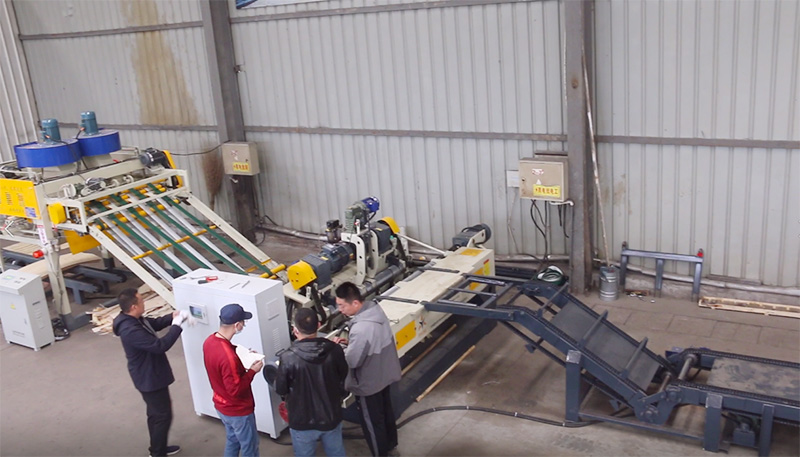
At Shine Machinery, we offer several configurations that illustrate why one simple capacity formula simply doesn't work for every dryer. A two-deck biomass roller dryer, a four-deck roller dryer, or even a vertical veneer dryer may serve vastly different production goals, even if all are used for veneer drying.
| Configuration | Listed capacity | Main listed configuration |
|---|---|---|
| GTH30-40 biomass roller dryer | 55–65 m³/24 h | 2 decks, 36 m heating + 4 m cooling |
| GTH30-36 roller dryer | 110 m³/day | 4 decks, 32 m heating + 4 m cooling |
| GTH30-52 roller dryer | 7–8 m³/h | 4 decks, 48 m heating + 4 m cooling |
| FBH30-13 vertical dryer | 2 m³/h | 13 × 3 × 4 m machine size |
| Low Cost Veneer Dryer Machine | 50–60 m³/day | 3 m width, 32 m heating area |
This comparison often reveals a common purchasing pitfall. Two veneer dryer machines might both feature four decks and a 3 m working width, yet their heating areas and listed capacities can differ significantly. For instance, our GTH30-36 is listed with a 32 m heating area and 110 m³/day capacity, while our GTH30-52 boasts a 48 m heating area and 7–8 m³/h capacity. A truly useful quotation should, therefore, connect the dryer design directly to your required output, not merely state the number of decks.
Roller dryers are generally recognized for continuous plywood veneer drying, especially when you need steady throughput and precisely controlled transport. Our Shine roller models offer veneer thickness coverage from 0.8 mm to 8 mm, an adjustable drying temperature of 140–200°C, automatic temperature control, and speed regulation in specified configurations. Our biomass burner options can efficiently utilize waste wood as heating material in our listed roller dryer models.

We position our Low Cost Veneer Dryer Machine as a roller veneer dryer featuring a 3 m working width, a 0.8–8 mm veneer thickness range, a 32 m heating area, and a 50–60 m³/day drying capacity. It serves as a practical benchmark for buyers who desire a low-cost veneer dryer but still need to confirm whether its daily output precisely matches their peeling volume.
A vertical veneer dryer addresses a distinct set of requirements. We design our vertical drying machines as equipment composed of feeding, heating, cooling, and discharging areas. They are primarily used for core veneer, partial surface veneer, and bottom board, proving ideal for processes that involve cutting first and then drying, particularly for thicker veneers. We also ensure that the vertical design can be utilized where veneer flatness requirements are slightly lower. For plants with limited floor planning flexibility, its three-dimensional loading approach is often evaluated alongside our roller options.
A complete veneer drying system is more than just a heated chamber. It represents a continuous flow of wet veneer entering, moving through controlled heat, cooling, and leaving the machine without unnecessary interruption. If your feeding stage is slow, your dryer may never reach its usable capacity. If discharge or collection is poorly coordinated, dry veneer can still become a handling bottleneck.
This underscores the crucial role of automatic handling. Our Shine automatic loading system is specifically designed to replace manual board feeding and can be installed with 2-deck, 3-deck, 4-deck, and 6-deck veneer dryers. Our product details indicate the system needs only 1–2 personnel per end of the dryer and helps significantly reduce veneer placement deviation and jamming. For our customers, the loading system isn't just an accessory; it directly affects whether your veneer dryer machine can truly keep pace with peeling.
A balanced veneer drying system should always be evaluated through five key questions:
What is your peeling output per hour and per shift?
What veneer thickness range will be dried most often?
What final moisture target is required for your next plywood process?
Is your heat source matched to local fuel conditions and the selected dryer?
Can your feeding, cooling, discharging, and collection systems truly support continuous veneer drying operation?
A low purchase price doesn't automatically translate to the lowest operating cost. Our Shine biomass roller dryer pages list a composite drying cost of USD 6–12 per cubic meter, covering labor, fuel, and electricity. Similarly, our vertical dryer pages state a drying cost of less than USD 8 per cubic meter. We recommend reviewing these figures carefully, considering your selected model, local fuel conditions, work schedule, veneer moisture, and actual production volume.
An undersized veneer dryer machine might appear economical at purchase but can severely restrict your output every single day. Conversely, an oversized dryer can leave installed capacity unused if your peeling line cannot supply enough veneer. When you're searching for a China veneer dryer manufacturer, China veneer dryer supplier, or a top China veneer dryer factory, we suggest comparing complete line requirements rather than broad labels such as “high capacity” or “low cost.” Shine Machinery’s Product Center provides comprehensive categories for roller dryers, vertical dryers, various heat-source options, automatic feeders, collection systems, and other related veneer production equipment.
Before placing an order, we encourage buyers to prepare a simple production sheet: daily peeling output, hourly peeling output, veneer thickness, fresh veneer moisture, required final moisture, working hours, available workshop size, labor plan, and your preferred heat source. Armed with these details, you can ensure your plywood veneer drying section is perfectly matched to your actual mill's needs, not just a generic rating.
Shandong Shine Machinery Co., Ltd, also known as Shine Machinery, proudly supplies a range of roller and vertical veneer dryer machine options, automatic loading equipment, and complete veneer production-line solutions through www.veneersdryer.com. For a detailed project discussion, you can contact Shine Machinery at info@sdshinemachinery.com or +8615806625431.
To ensure optimal integration, convert both peeling output and dryer capacity into the same time unit, such as cubic meters per hour or per day. Then, meticulously compare factors like veneer thickness, target moisture levels, operational working hours, and the capacities of your feeding, cooling, and discharge systems.
Not necessarily. While deck count contributes, our listed models demonstrate that heating length, cooling length, the transport system, and the overall configuration also significantly influence the total drying capacity. Deck count alone isn't a comprehensive basis for selection.
A vertical veneer dryer is primarily recommended for core veneer, certain surface veneers, bottom boards, and thicker veneers. It's particularly suitable for processes where veneers are cut first and then dried, especially in applications with slightly less stringent flatness requirements or limited floor space.
A complete veneer drying system encompasses a coordinated setup including feeding, heating, cooling, discharging, and collection mechanisms. Crucially, the heat source and automatic loading systems should also be thoroughly evaluated during your line planning phase.
Not always. We advise buyers to evaluate the composite drying cost per cubic meter, which includes fuel conditions, labor, and electricity. It's essential to consider the overall throughput and whether the dryer's capacity truly aligns with your peeling output to determine its long-term cost-effectiveness.
Copyright By © Shandong Shine Machinery Co.,Ltd
 ไทย
ไทย Indonesia
 Melayu
 Tiếng Việt
 Pусский
 Portugues
 Français
 Deutsch
 日本語
日本語 한국어
한국어 العربية
 Italiano
 Polski
 Nederlands
 Türk dili
 हिन्दी
 Ελληνικά
 Svenska
 Español


