Oak veneer can be unforgiving in plywood production. A drying machine may achieve the target moisture level, yet finished sheets might still fall short if flatness, surface smoothness, wrinkles, end ripples, or cracks are not managed. For buyers assessing processing equipment for this wood, a key principle emerges: when flat, wrinkle-free output is the goal, representative oak samples should be dried and inspected before full-scale selection.
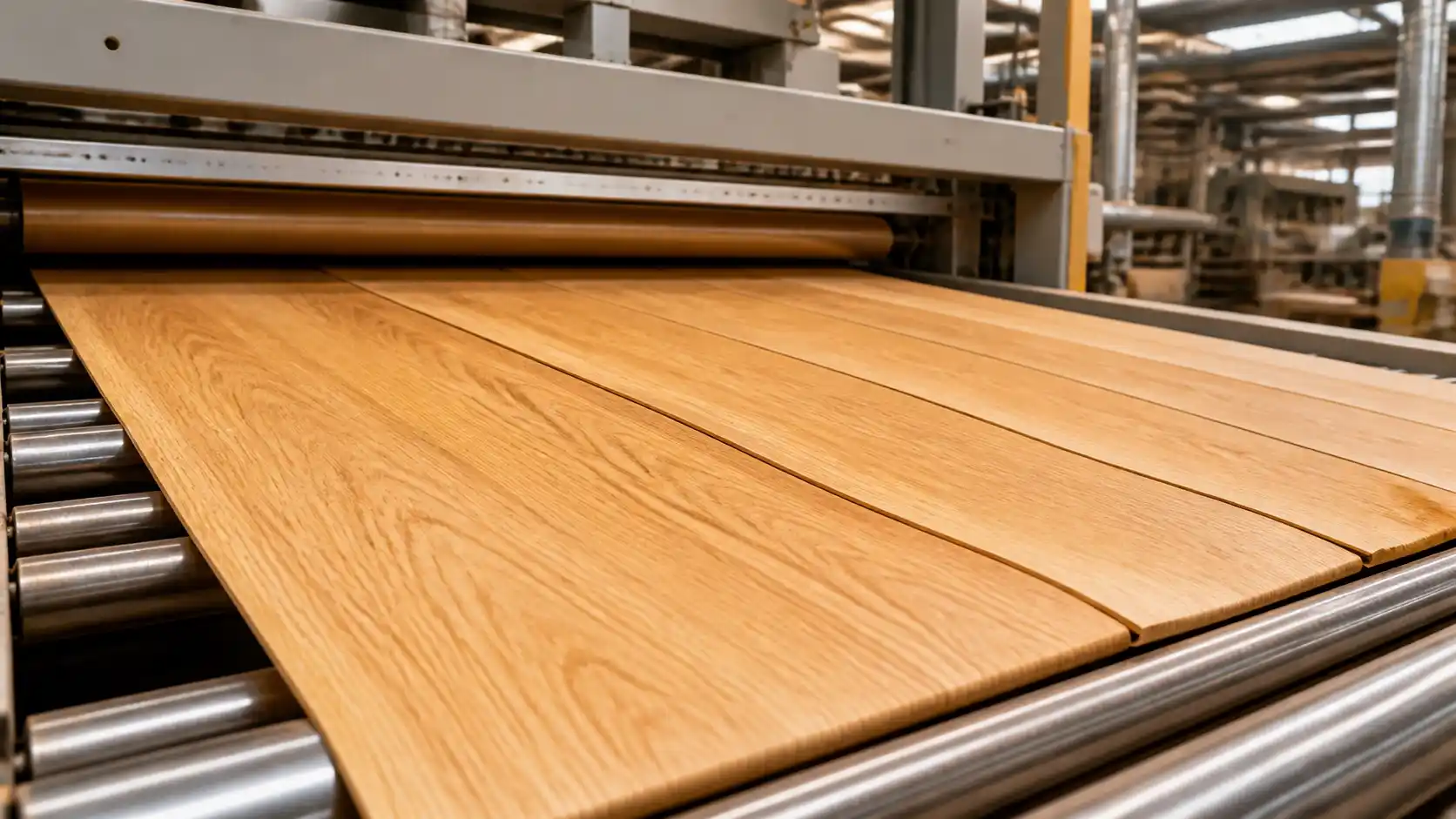
In plywood production, veneer drying is more than just removing moisture. The real question for purchasers is whether the material leaves the equipment in a state suitable for subsequent processes. For oak, this often means a controlled final moisture level, uniform moisture distribution, a smooth surface, minimal visible defects, and stable sheet flatness. So, equipment selection really begins with the desired finished material quality, rather than solely focusing on capacity or operating cost. Shine Machinery highlights smooth, flat output for several roller dryer configurations, while their vertical tunnel-type core unit primarily handles core material, some surface types, bottom veneer, thick sheets, and those with less stringent flatness requirements. This distinction is crucial when oak flatness is the main priority.
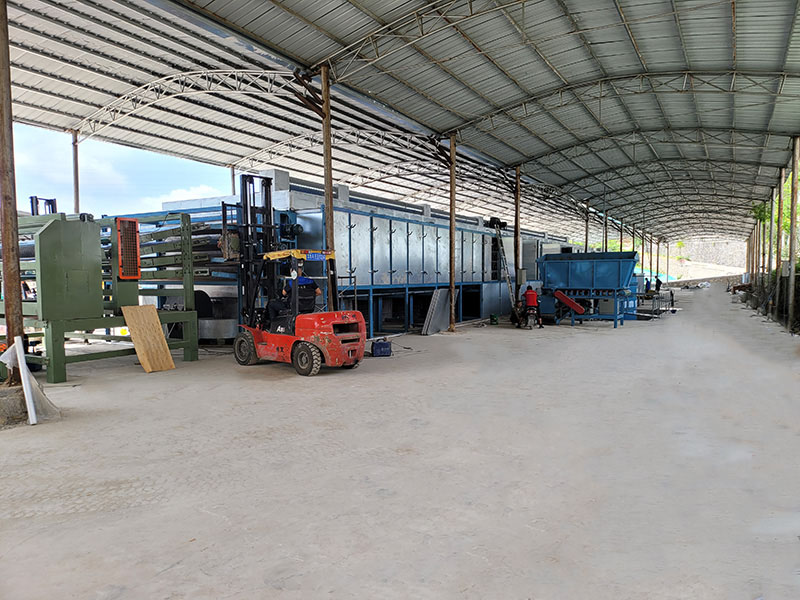
A continuous veneer dryer machine integrates heating, hot-air circulation, material transport, cooling, and precise process control. For instance, Shine Machinery’s 0.5 m³/h single-deck roller dryer features automatic temperature control and speed regulation. Its specified transport speed ranges from 5–22 m/min, with a direct-air heating temperature of 140–180°C. The product description emphasizes that the dried veneer surface is smooth, free from cracks, wrinkles, and end ripples. For buyers, these specifications make roller drying a compelling option to consider when appearance and flatness are key. However, oak veneer differs based on thickness, initial moisture, cutting quality, and production goals. While documented machine features are a strong starting point, the ultimate decision should come from drying actual oak veneer samples under proposed settings.
Shine Machinery provides various dryer types to suit diverse production environments. For example, their steam-heated four-deck roller dryer can be powered by steam or thermal oil. Typically, this steam unit operates around 160°C, featuring an automatic feeder before the main drying body and a semi-automatic material collection system post-drying. The product details confirm that the material processed by this steam roller unit is smooth, flat, and boasts consistent moisture content. In contrast, a Vertical Veneer Dryer serves different needs. Shine Machinery presents the vertical unit as a cost-effective, compact solution, requiring roughly two-thirds the space of conventional roller dryers. Its vertical loading boosts material capacity, delivering 30–80% higher output than other types, with a drying cost under USD 8/m³. These benefits are significant when a project prioritizes core material economics, compact setup, and high loading capacity. However, for oak veneer demanding a superior surface finish, buyers should not let the vertical unit's economic benefits overshadow the need for surface-quality validation. The appropriate method involves aligning the equipment type with the desired quality outcome, then verifying the results through sample drying.
Cost-effective drying machines are often appealing, particularly when energy and labor expenses are critical to production competitiveness. Shine Machinery provides various operating-cost figures for different configurations: under USD 8/m³ for the vertical unit, as low as USD 12/m³ for the biomass four-deck dryer, and USD 6–12/m³ for the GTH30-28 jet dryer, encompassing labor, fuel, and electricity. Such figures should be considered alongside the equipment structure and specific product requirements. The biomass four-deck unit features separate heating and cooling sections, utilizing automatic temperature control and speed regulation to manage final moisture content. The GTH30-28 jet dryer accommodates material thicknesses from 0.8–8 mm, operates within an adjustable drying range of 140–200°C, and boasts an 80–85 m³/day capacity for that model. For oak veneer, the lowest cubic-meter cost isn't automatically the optimal procurement choice. A dryer that is economical for core material might not be ideal when a buyer needs a smooth, flat, wrinkle-free oak surface. Cost comparisons should factor in the proposed heat source, deck setup, footprint, output goals, and the ultimate quality demands.
Before committing to a production-scale veneer drying system, buyers ought to prepare oak veneer samples that genuinely represent typical production, rather than cherry-picked sheets that might conceal common inconsistencies. The sample test should document material thickness, initial moisture, target final moisture, acceptable flatness, and specific visible surface requirements.

A practical trial typically proceeds as follows:
Verify the oak veneer thickness and initial moisture condition.
Establish the target final moisture range and acceptable surface quality.
Select the dryer configuration best suited to the desired quality.
Experiment with drying temperature and material transport speed within the chosen machine’s operational parameters.
Examine dried samples for moisture consistency, flatness, wrinkles, end ripples, cracks, and surface smoothness.
Adjust the process as necessary and re-test.
Approve the machine only after the sample consistently meets the required oak finish.
This approach clarifies two distinct questions: firstly, if the equipment is capable of processing veneer; and secondly, if the chosen configuration can deliver the precise oak veneer quality the project demands. For wrinkle-free oak production, the latter question is paramount.
International buyers assessing a China drying machine manufacturer or supplier should compile a thorough project profile before requesting a quotation. Capacity alone is insufficient. A comprehensive specification package ought to include:
Oak veneer thickness and typical incoming moisture levels.
Target final moisture content and consistency.
Required flatness and tolerable visible defects.
The balance between core-veneer economics and superior surface quality.
Desired roller dryer, vertical dryer, biomass, steam, or thermal-oil configuration.
Needed production capacity and available factory space.
Heat source specifics and anticipated operating-cost targets.
Results from sample tests using representative oak veneer.
Shandong Shine Machinery Co., Ltd provides single- and multi-deck roller dryers, biomass and steam-heated configurations, Vertical Veneer Dryer equipment, jet dryers, and associated production machinery via www.veneersdryer.com. For oak wood veneer where flatness is a critical acceptance condition, the most dependable purchasing strategy involves evaluating the relevant equipment configuration and verifying the finished sheet through sample drying.
For oak veneer, wrinkle-free output should be confirmed by drying representative samples. Machine configuration, material thickness, incoming moisture, and surface requirements all affect the final result.
A Vertical Veneer Dryer is suitable when compact installation, low drying cost, high loading capacity, and core material processing are the main priorities. Shine Machinery also describes it for thick sheets and materials with lower flatness requirements.
Roller dryer configurations are especially relevant for evaluation. Shine Machinery describes its steam-heated four-deck roller dryer as producing smooth, flat material with uniform moisture content, and its 0.5 m³/h roller dryer as producing smooth material without wrinkles, cracks, or end ripples.
No. Drying cost should be considered together with material quality, heat source, capacity, and flatness requirements. A low-cost configuration is most valuable when it also meets the required finished material standard.
Buyers should prepare representative oak veneer, thickness data, incoming moisture condition, final moisture target, acceptable flatness standard, and inspection criteria for wrinkles, end ripples, cracks, and surface smoothness.
Copyright By © Shandong Shine Machinery Co.,Ltd
 ไทย
ไทย Indonesia
 Melayu
 Tiếng Việt
 Pусский
 Portugues
 Français
 Deutsch
 日本語
日本語 한국어
한국어 العربية
 Italiano
 Polski
 Nederlands
 Türk dili
 हिन्दी
 Ελληνικά
 Svenska
 Español


