Fresh veneer entering a drying line, often with 60–80% moisture, presents a significant control challenge. When the target final moisture is typically between 0% and 15%, operators simply cannot rely on guesswork, old experience, or constant manual adjustments. In the real world of plywood veneer drying, the final outcome truly hinges on how temperature, conveyor speed, veneer thickness, and initial moisture are all carefully coordinated. A modern veneer dryer machine, therefore, should be chosen and operated as a sophisticated, controlled drying system, not just a simple hot-air tunnel.

Moisture content describes exactly how much water remains in the veneer. Drying temperature defines the thermal environment inside the dryer, while conveyor speed dictates how long each sheet stays within the heated zone. When processing veneer of varying thicknesses or with different initial moisture levels, one fixed setting simply will not work for every batch.
Shine Machinery's Veneer Dryer uses automatic electric control and frequency conversion. This system allows both the transmission speed and temperature to be precisely adjusted based on veneer thickness and moisture content. For buyers evaluating a Veneer Drying System, the real value comes from this coordinated control: heat and residence time work in tandem to ensure more consistent final moisture levels.
Various Shine Machinery configurations demonstrate this consistent operating logic. For instance, the GTH30-28 biomass burner veneer dryer features an adjustable drying temperature of 140–200°C and a veneer transport speed ranging from 5–22 m/min. Its heating area spans 24 m, complemented by a 4 m cooling area, and it is designed to dry fresh veneer down to approximately 10% moisture.
Another configuration, the GTH30-44, also offers an adjustable drying temperature of 140–200°C and a veneer transport speed of 5–22 m/min, with a temperature control accuracy of ±5°C. This model also aims to dry fresh veneer to about 10%. These figures emphasize why the desired final moisture target needs to align with the specific veneer dryer machine chosen, along with the veneer thickness, initial moisture, and required output, rather than being treated as a universal promise.
A typical Shine roller veneer dryer line is structured around four crucial stages:
Inlet → Drying Area → Cooling Area → Outlet
Rollers efficiently carry veneer through the entire line. In the heating area, Shine's advanced heat exchanger transfers heat progressively. Each section of the heat exchanger possesses distinct characteristics, ensuring hot air is exchanged through the system before being distributed evenly across the veneer. This staged heat-transfer design is critical, as plywood veneer drying is not solely about removing water quickly; it is about producing veneer that remains perfectly suited for subsequent production steps.
After drying, the ideal veneer condition includes uniform moisture content, a perfectly flat surface, no buckling or end waviness, no splits, and a surface primed for effective gluing. For plywood production, this surface quality is often just as important as the moisture percentage itself.

Selecting the right heat source impacts both production costs and overall plant operations. Shine Machinery's Biomass Burner can effectively utilize crushed wood waste, wood chips, and tree bark as fuel. In veneer and plywood factories, this offers processors a practical method to repurpose residues generated during peeling and production.
This is why biomass configurations are frequently considered a Low Cost Veneer Dryer option. A published four-layer, 36 m roller veneer dryer configuration reports a productivity of 4.6–5 m³/h and a comprehensive drying cost of just USD 6–12/m³. That same product description notes it can dry veneer thicknesses from 0.8–8 mm, achieving a minimum drying value down to 0% for that specific configuration. These figures should be seen as configuration-specific data, valuable for comparison when buyers define their output, floor space, fuel source, and final moisture requirements.
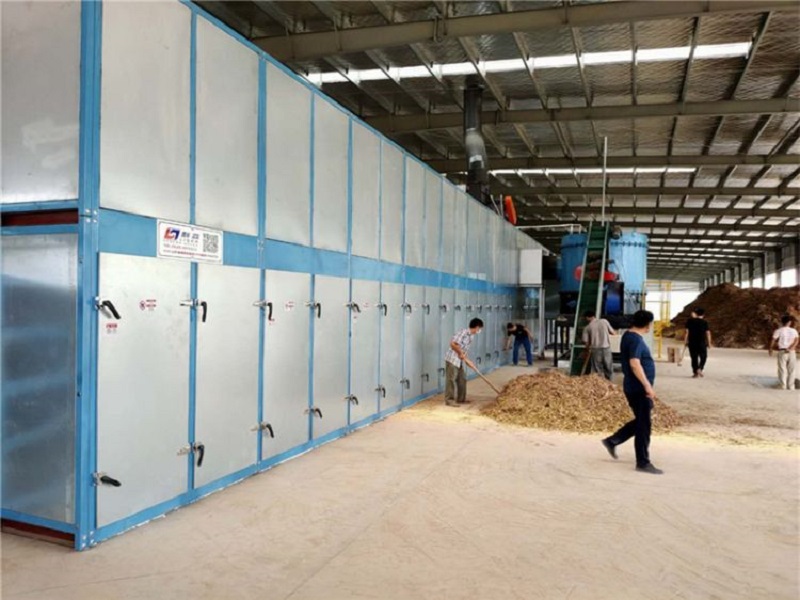
Automation in a veneer dryer machine extends beyond just heating. Shine Machinery provides an automatic veneer feeder and an automatic collection system. These systems significantly boost drying efficiency and reduce labor demands by enabling more continuous feeding and receiving of veneers.
For buyers comparing a roller Veneer Drying System with a Vertical Veneer Dryer or other dryer designs, the primary question should not merely be about maximum temperature. A more effective procurement query involves whether the equipment can meet the plant's specific veneer thickness range, incoming moisture, target final moisture, daily output, heating method, layout, and labor strategy.
A 0–15% final moisture target should be viewed as a production requirement that needs to be carefully engineered through the right configuration and operational settings. Several Shine Machinery specifications indicate drying fresh veneer to about 10%, while the description for the four-layer 36 m roller dryer reports a minimum achievable moisture content of 0% for that particular machine.
When veneer enters at 60–80% moisture, the practical approach involves first defining the required final moisture, then selecting the veneer dryer machine configuration and operating range accordingly. Temperature, transport speed, heating-section length, cooling area, deck arrangement, and automation should all be considered in unison. This is particularly important for buyers seeking a China veneer dryer manufacturer, China veneer dryer supplier, or a top China veneer dryer factory with equipment truly suitable for plywood veneer drying.
Shandong Shine Machinery Co., Ltd offers roller veneer drying configurations equipped with automatic electric control, frequency conversion, staged heat exchange, biomass heating options, automatic feeding and collection systems, and flexible line arrangements. For more product details and configuration references, please visit our website.
It coordinates drying temperature and veneer transport speed. Shine Machinery dryers utilize automatic electric control and frequency conversion to adjust temperature and transmission speed based on veneer thickness and moisture content.
No, a single moisture range should not be universally applied to every configuration. Some Shine Machinery specifications aim to dry fresh veneer to about 10%, while one four-layer 36 m roller dryer description indicates a minimum of 0% for that particular setup.
The GTH30-28 and GTH30-44 configurations typically list an adjustable drying temperature of 140–200°C and a veneer transport speed of 5–22 m/min. Actual operation should always be tailored to the specific veneer thickness, incoming moisture, and production requirements.
Shine Machinery's biomass burner configurations can effectively use crushed wood waste, wood chips, and tree bark as fuel. This offers factories a sustainable way to utilize wood residues as a heat source for their drying lines, reducing operational costs.
Key comparison points include the veneer thickness range, incoming moisture, target final moisture, required output, heating method, working width, available floor space, deck arrangement, automation features, and any downstream gluing requirements.
Copyright By © Shandong Shine Machinery Co.,Ltd
 ไทย
ไทย Indonesia
 Melayu
 Tiếng Việt
 Pусский
 Portugues
 Français
 Deutsch
 日本語
日本語 한국어
한국어 العربية
 Italiano
 Polski
 Nederlands
 Türk dili
 हिन्दी
 Ελληνικά
 Svenska
 Español


