In the contemporary construction and interior fit-out industries, few material pairings are as ubiquitous yet as functionally distinct as plywood and gypsum board. Though both are supplied in large sheets, they serve fundamentally different purposes. As global demand for faster project delivery and sustainable sourcing rises, understanding the complementary roles of these two core panel products has become essential for industry professionals.
Plywood is an engineered wood panel manufactured by gluing together multiple thin layers of wood veneer ("шпон"), with the grain of each layer oriented perpendicular to the last. This cross-laminated structure gives plywood exceptional dimensional stability and high bending strength.
In construction, plywood’s primary value lies in its load-bearing capacity. It is extensively used as concrete formwork, where phenolic film-faced panels provide a smooth finish to poured structures while withstanding repeated reuse. In timber-frame buildings, structural-grade plywood serves as wall and roof sheathing, acting as a diaphragm to transfer wind and seismic shear forces throughout the envelope. Subfloor underlayment is another classic application, offering a stable base for finished flooring.
Beyond structural uses, plywood is vital in interior finishing. Cabinets, built-in furniture, and countertops utilize high-grade hardwood plywood for its superior screw-holding power. In utility areas like garages and mechanical rooms, it is the preferred wall lining because it can support heavy shelving and equipment without requiring additional framing. Water-resistant variants, bonded with WBP (Weather and Boil Proof) adhesive, extend its usability into humid environments such as kitchens and bathrooms.
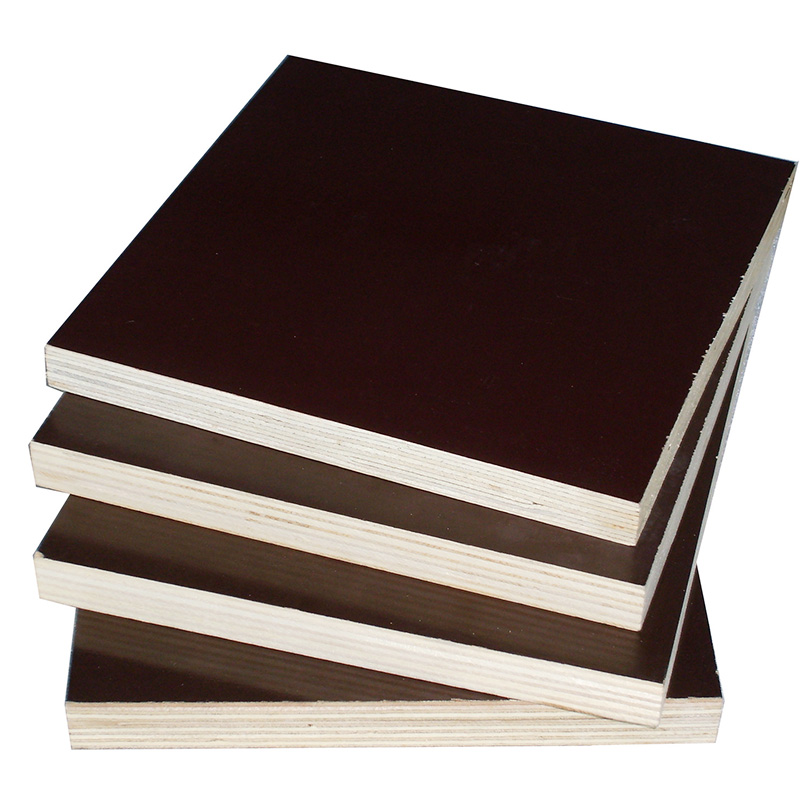
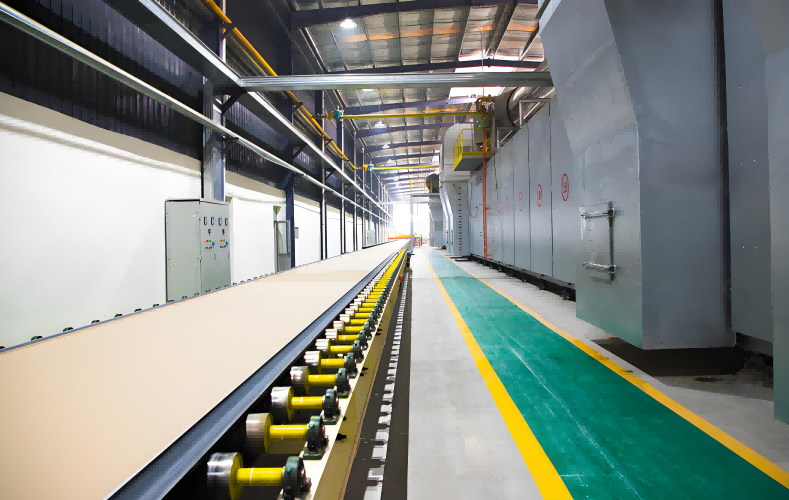
Gypsum board, by contrast, is a non-structural panel consisting of a gypsum plaster core sandwiched between paper. Its defining characteristics are lightness, workability, inherent fire resistance, and the ability to deliver a monolithic, seamless interior surface.
The dominant application of gypsum board is creating non-load-bearing partitions and suspended ceilings. Because the gypsum core contains chemically bound water, it acts as a fire retardant; when exposed to high heat, the water is released as steam, delaying flame propagation. This makes fire-rated gypsum board a code-compliant choice for stairwells and fire-separated occupancies.
Acoustic performance is another strong suit. When installed with cavity insulation, gypsum board delivers significant airborne sound attenuation, which is critical in hotels, multifamily housing, and offices. The material is also exceptionally easy to finish, producing a perfectly flat surface ready for paint or wallcoverings—something plywood cannot match without extensive labor.
Rather than competing, plywood and gypsum board are frequently deployed in tandem. A typical modern office fit-out may use gypsum board partitions for general walls, while incorporating hidden plywood backing blocks behind the drywall wherever televisions or heavy signage will be mounted. In high-end residential interiors, designers often specify exposed plywood feature walls juxtaposed against crisp white gypsum-board ceilings, marrying warmth and texture with safety.
The global market for both materials is being reshaped by sustainability. Plywood manufacturers are increasingly obtaining FSC® or PEFC certification to ensure responsible forest sourcing. Formaldehyde-free adhesives are becoming standard, responding to tightening indoor air quality regulations in the EU and North America.
Gypsum board producers are investing in closed-loop recycling of post-consumer gypsum, reducing embodied carbon and diverting waste from landfills. Some leading brands now offer boards with active air-purifying additives that neutralize formaldehyde and VOCs within occupied spaces—a feature gaining traction in healthcare facilities.
While plywood and gypsum board occupy different niches—one structural and load-capable, the other non-structural and acoustically optimized—they are jointly indispensable to modern building practice. Specifiers who understand the strengths and limitations of each can design interiors that are safer, more durable, and better adapted to the evolving demands of sustainability and occupant comfort. As dry construction methods continue to replace traditional wet-plaster techniques, the synergy between these two foundational panel products will remain at the heart of efficient, high-performance building envelopes.
Copyright By © Shandong Shine Machinery Co.,Ltd
 ไทย
ไทย Indonesia
 Melayu
 Tiếng Việt
 Pусский
 Portugues
 Français
 Deutsch
 日本語
日本語 한국어
한국어 العربية
 Italiano
 Polski
 Nederlands
 Türk dili
 हिन्दी
 Ελληνικά
 Svenska
 Español


