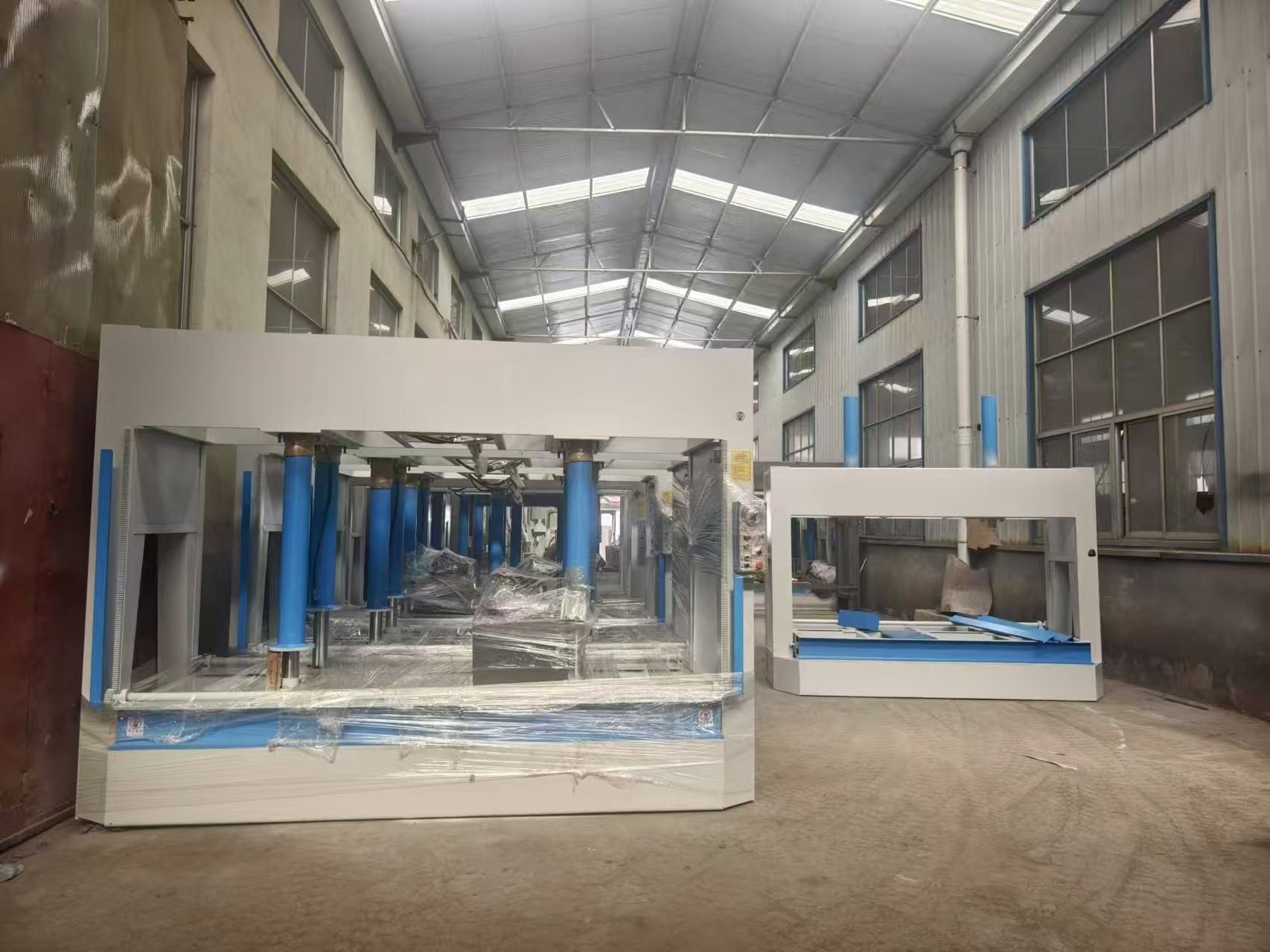
In the highly engineered world of plywood manufacturing, where the interplay of pressure, temperature, and time transforms individual veneers into a unified, structural panel, every piece of equipment plays a defined and critical role. While the plywood hot press often commands center stage for its dramatic final cure, a preceding, room-temperature process is equally vital for ensuring final product quality and production efficiency. This process is driven by the plywood cold press, also accurately known as the plywood pre-press. It is the indispensable preparatory stage that bridges the gap between adhesive application and final thermal curing, setting the foundational conditions for a perfect bond.
Following the precise application of adhesive—typically urea-formaldehyde, phenol-formaldehyde, or melamine-urea-formaldehyde resins—to the surface of veneer piles, the layered assembly (known as a "lay-up" or "mat") is conveyed to the cold press. This machine operates, as its name implies, without the application of external heat. Its function is to subject the assembled veneer packs to significant, uniformly distributed pressure at ambient temperatures for a defined period. This is not a final curing stage but a crucial consolidation phase. During this dwell time under pressure, the adhesive begins its initial physical gelling and chemical penetration into the wood substrate, developing a "green" or preliminary bond that is sufficient to hold the panel together for handling and transfer into the hot press.
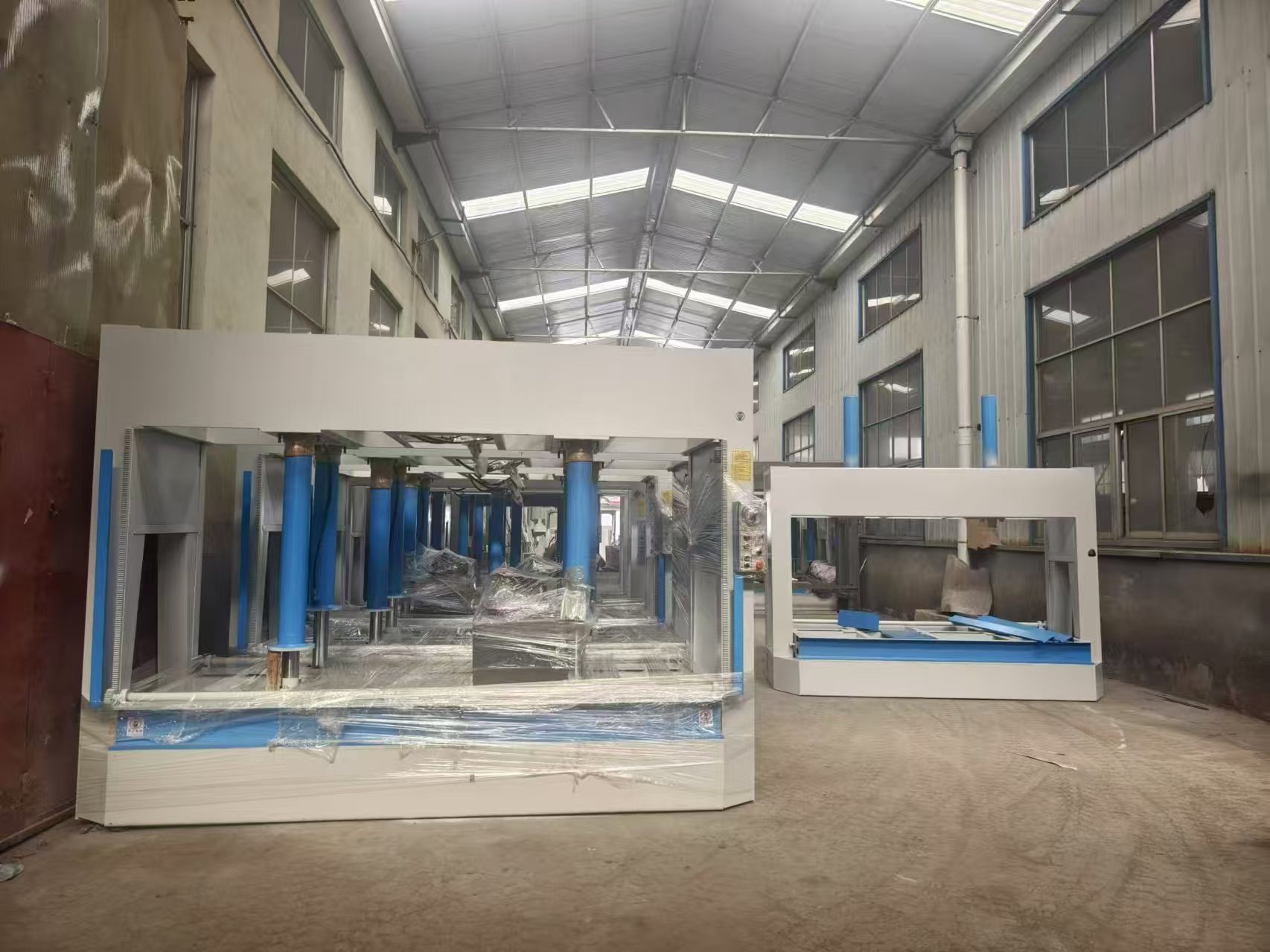
The integration of a cold press into a plywood production line is driven by three fundamental technical and economic objectives, each addressing specific challenges in panel assembly:
Pre-Press Consolidation and Dimensional Stabilization: Freshly assembled veneer packs, even with careful lay-up, contain microscopic voids, air pockets, and slight surface irregularities between plies. When such a pack is directly fed into a hot press, the rapid closure of the press platens and the immediate application of intense heat and pressure can force these air pockets to migrate, potentially causing localized delamination or uneven adhesive distribution. The cold press methodically eliminates these gaps. By applying sustained, high pressure at room temperature, it compresses the veneer pack to its final, near-net thickness, ensuring intimate, full-area contact between all adhesive-coated surfaces. This process expels trapped air and allows the adhesive to flow uniformly, creating a cohesive, stabilized panel "blank" with a consistent density profile. This pre-consolidated blank is dimensionally stable, eliminating spring-back and ensuring a predictable, uniform target thickness entering the hot press.
Optimization of Hot Press Cycle Efficiency and Energy Economy: The hot press is the most energy-intensive unit operation in a plywood mill, with its massive heated platens consuming substantial thermal energy. Directly pressing an unconsolidated, "loose" lay-up requires a significantly longer press closure time and higher initial pressure to achieve the same intimate contact. The cold press performs this thickness-reduction work offline, without consuming thermal energy. Consequently, when the pre-consolidated panel enters the hot press, the press can close rapidly to its final position. The required "closing time" and the peak pressure demand on the hot press's hydraulic system are substantially reduced. This translates directly into shorter hot-press cycles, increased press capacity (more panels per hour), and lower overall energy consumption per panel, offering a compelling return on investment for the cold press unit.
Prevention of Veneer Slippage and Panel Defects: A critical, often overlooked function is the prevention of internal movement. The preliminary bond strength developed in the cold press effectively "tacks" the veneer plies together. Without this tack, the rapid heating in the hot press can cause the veneers, especially the cross-bands, to shift or slide as the adhesive initially liquefies before curing—a phenomenon known as "slippage." This misalignment can ruin the panel's structure. Furthermore, the preliminary bond seals the interfaces between plies, preventing steam and volatile gases generated during the hot-press cure from forming blisters or causing localized delamination. The cold-pressed panel enters the hot press as a single, coherent unit, dramatically reducing the incidence of these costly quality defects.
Shine Machinery designs and manufactures cold press systems that embody the precision required for this critical intermediate process. Our engineering philosophy focuses on delivering the uniform pressure and operational reliability that the pre-press stage demands.
Rational Structural Design for Pressure Uniformity: The press frame is constructed from high-strength steel, engineered for minimal deflection under maximum load. The heart of the system is the precision-machined press platen, whose rigidity and parallelism are paramount. We ensure that the pressure applied by the hydraulic cylinders is distributed evenly across the entire platen surface, from center to edge. This eliminates low-pressure zones that would result in poorly consolidated panel areas, guaranteeing that every square inch of the veneer pack receives the consistent pressure needed for optimal preliminary bonding.
Quality-Centric Manufacturing: To achieve this performance, we source critical production materials and components from reputable domestic and international suppliers. This includes high-grade steel for structural integrity, precision hydraulic components for reliable pressure generation and control, and durable seals and guides for long-term, maintenance-friendly operation. This supply chain strategy ensures that each press is built to withstand continuous industrial use.
Enhanced Automation and Control: Our cold presses can be configured with automatic loading and unloading systems, integrating seamlessly into semi- or fully-automated production lines. This reduces labor requirements, minimizes handling damage, and ensures consistent cycle timing. Operation is managed through a dedicated, free-standing control cabinet, featuring a Siemens Programmable Logic Controller (PLC). This industry-proven control system provides reliable, repeatable automation of the press cycle—containing pressure application, dwell time, and pressure release. The system ensures every panel receives an identical, precisely timed pre-press treatment, which is fundamental to achieving consistent panel quality.
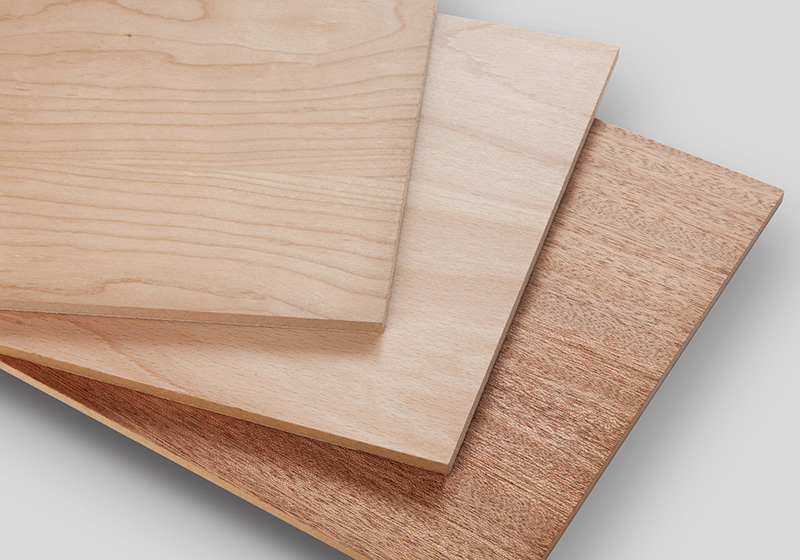
In conclusion, the plywood cold press is a paradigm of process optimization. It is a machine that applies fundamental mechanical principles—pressure and time—at ambient conditions to solve multiple downstream production challenges. By delivering pre-consolidated, stabilized, and tack-bonded panel blanks, it directly enhances the efficiency of the plywood hot press, reduces energy consumption, and safeguards the final product's structural integrity and dimensional accuracy. It is, in every sense, a silent guarantor of quality and productivity in the modern plywood production line. Shine's cold press systems are engineered to fulfill this guarantor role with unwavering reliability and precision, forming the essential, robust link between lay-up and final cure.
Copyright By © Shandong Shine Machinery Co.,Ltd
 ไทย
ไทย Indonesia
 Melayu
 Tiếng Việt
 Pусский
 Portugues
 Français
 Deutsch
 日本語
日本語 한국어
한국어 العربية
 Italiano
 Polski
 Nederlands
 Türk dili
 हिन्दी
 Ελληνικά
 Svenska
 Español