Buying a Low Cost Veneer Dryer can be a smart move for a plywood line—until the acceptance stage turns into a debate about “equivalent parts,” unclear test conditions, or what “stable operation” really means. The fastest way to protect your budget and your output is to turn key mechanical choices such as Q235B rollers and 16A chains, when your plant requires them, into measurable acceptance criteria—alongside heating performance, control functions, and plywood veneer drying results.

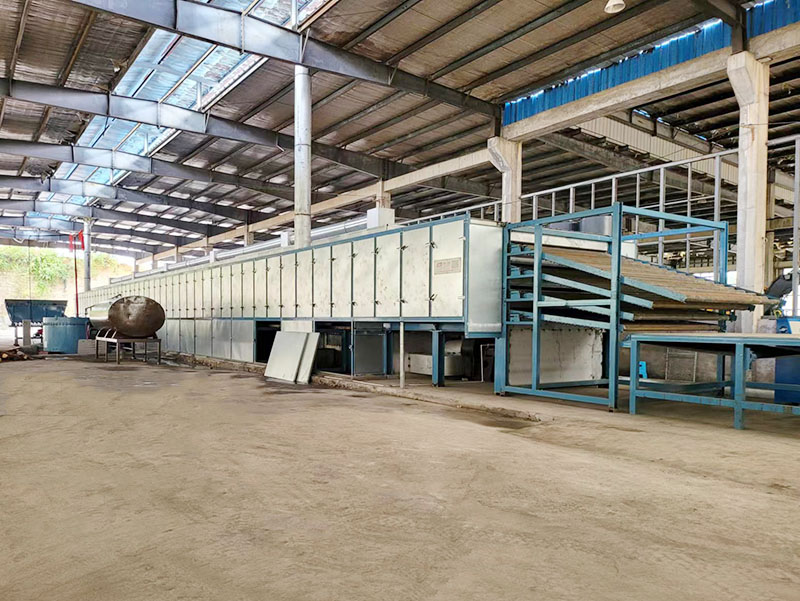
A veneer dryer machine is not purchased like a generic utility. It becomes part of a Veneer Drying System where mechanical stability, heat delivery, and control repeatability directly affect daily throughput and the consistency of drying veneer.
In practice, most procurement disputes do not happen because a supplier refuses to deliver a dryer. They happen because the contract leaves room for interpretation:
A roller material is not explicitly stated, so “similar steel” is delivered.
A chain model is not named, so the transmission uses a different pitch or grade than your maintenance standard.
A temperature range is described in marketing terms, but the acceptance test never defines where and how it will be measured.
For mills that standardize maintenance spares and want predictable uptime, the simplest solution is to treat component requirements as acceptance items, not “preferences.”
Many buyers mention “Q235B rollers” and “16A chains” during discussion—but fail to translate them into contract language that can be verified on site. If your engineering team has decided these are mandatory for your line, the acceptance clause should be written so that an inspector can confirm compliance without guessing.
When specifying Q235B rollers and 16A chains, it helps to structure the clause around identity, interfaces, and inspection:
Component identification
Roller material grade requirement, such as Q235B, as a named requirement.
Transmission chain model requirement, such as 16A, as a named requirement.
Critical dimensions and interfaces
Roller diameter, length, and wall thickness.
Matching sprockets for the specified chain model.
Alignment requirements for roller installation and transmission layout.
Inspection method and records
How materials and models will be verified through documentation review, markings, or other agreed checks.
Which parts are inspected at the factory versus on-site after installation.
Spare and replacement clarity
Whether spare chain links, sprockets, or rollers are included.
The exact specifications to be used for future replacement orders.
This approach does not force a “one-size-fits-all” configuration. It simply ensures that your chosen standard is delivered and can be accepted without ambiguity.

A well-written acceptance checklist works best when it is tied to a specific equipment configuration. One published example of a roller configuration is Shine Machinery’s Low Cost Veneer Dryer Machine, which lists the following parameters.
| Item | Published parameter |
|---|---|
| Type | Roller Veneer Dryer |
| Working width | 3 m |
| Heating area length | 32 m |
| Veneer thickness | 0.8–8 mm |
| Drying capacity | 50–60 m³/day |
| Heat source | Biomass burner (other options available) |
Those figures help buyers translate “low cost” into a practical baseline: working width, heating length, thickness range, and a daily capacity target.
Beyond dimensions, the acceptance file should reflect how the dryer will be operated.
On Shine Machinery’s published cost-saving roller dryer page, the system is described as supporting multiple heat sources such as thermal oil, biomass burner, natural gas, and steam, and it highlights a control cabinet with automatic temperature control and speed regulation. It also describes temperature control at 140–180°C for a biomass heating configuration and notes that using axial-flow fans can reduce overall machine power by 38%.
A buyer-friendly way to use such statements is to convert them into acceptance checks:
Confirm the selected heat source matches what is installed.
Verify temperature control and speed regulation operate through their usable range.
Define how temperature will be measured, including location, sensors, and duration.
Where energy performance claims are important for a purchasing decision, buyers typically request that test conditions be written into the acceptance protocol so the result is comparable to how the mill intends to run the line.
In plywood veneer drying, equipment selection often comes down to surface quality targets, layout constraints, and cost per cubic meter.
A roller configuration is commonly chosen when mills prioritize smoother veneer and stable conveyance. For core veneer applications, a vertical configuration may be evaluated when flatness requirements are lower and the focus is loading efficiency.
Shine Machinery’s Vertical Veneer Drying Machine page describes a vertical tunnel-type core veneer dryer composed of four sections feeding, heating, cooling, and discharging. It also states:
Composite drying cost is less than $8/m³.
Vertical loading can increase veneer loading capacity by 30–80% compared with other dryer types.
The equipment needs to be assembled on the customer’s factory site and can be installed according to location requirements.
For procurement teams, the key is not to declare one design “better,” but to tie acceptance criteria to your intended use:
If your plywood veneer drying line needs a flatter, smoother surface for downstream processes, acceptance should emphasize post-drying surface condition and handling stability.
If your priority is economical core veneer drying and compact loading, acceptance should emphasize loading method, throughput under agreed conditions, and safe operation across shifts.
A practical acceptance procedure typically covers three layers: mechanical integrity, control functionality, and drying results.
If your contract specifies Q235B rollers and 16A chains, the inspection should be document-driven and physical:
Verify roller material grade as defined in the contract and the agreed roller dimensions.
Verify chain model 16A and confirm matching sprockets are installed.
Run the transmission under load to check for abnormal vibration and noise.
Confirm maintenance access for routine items such as chains, sprockets, tension points, and roller sections.
For dryers described as having automatic temperature control and speed regulation, acceptance should include:
Confirm the control cabinet functions, including temperature control logic and speed adjustment.
Confirm the installed heat source matches the selected configuration.
Confirm safe start-up and shutdown steps are consistent with the operating instructions supplied.
Mechanical conformity alone does not guarantee usable veneer. A production-style test is usually the final gate:
Define wood species, veneer thickness, initial moisture, target final moisture, and test duration.
Inspect veneer for visible defects after drying, including wrinkles, cracks, end ripples, and consistency across the width.
On Shine Machinery’s cost-saving roller dryer page, drying capacity and moisture outcomes are presented by wood species across different deck configurations, and it states a veneer thickness range of 0.8–8 mm and drying fresh veneers, often above 50–70% moisture depending on species, to about 0–10%.
Separately, Shine Machinery’s Roller Core Veneer Drying Machine page describes biomass heating with a water circulation system and notes a composite veneer drying cost of USD 6–12 per cubic meter, with bark and other tree waste referenced as possible fuels.
Procurement teams often use these published targets as a starting point, then formalize a test protocol that reflects the mill’s own production requirements.
International sourcing works best when specifications are written for inspection, not interpretation. Supplier discussions typically move faster when buyers share:
Veneer thickness range, working width needs, and target daily capacity.
Available heat sources at the site and the preferred configuration to be installed.
A list of non-negotiable parts to be written into acceptance, such as Q235B rollers and 16A chains, if required by your maintenance standard.
Shine Machinery is presented in published company information as focusing on veneer drying machine R&D and manufacturing for more than 20 years, with products exported to 50+ countries.
For buyers who want to explore configurations, one practical next step is to review product pages and then request a quotation with acceptance terms attached:
Browse the manufacturer catalog: Products
Review the published Cost Saving Roller Veneer Drying Machine
Not inherently. They are a buyer-selected material requirement that should be written into the purchase agreement and verified at acceptance if your mill standardizes on that grade.
No. Chain selection depends on the transmission design. If 16A is required for your spares strategy, specify it explicitly and require matching sprockets.
Commonly defined items include working width, heating area length, veneer thickness range, daily drying capacity, and the selected heat source.
The published description references thermal oil, biomass burner, natural gas, and steam as heat-source options, along with automatic temperature control and speed regulation.
It is commonly evaluated for core veneer drying where flatness requirements are lower. Published information highlights a four-section layout and emphasizes low composite drying cost and high loading capacity.
A clear test definition typically includes veneer thickness, species, initial moisture, target final moisture, operating settings, run time, and agreed criteria for surface condition and consistency.
Copyright By © Shandong Shine Machinery Co.,Ltd
 ไทย
ไทย Indonesia
 Melayu
 Tiếng Việt
 Pусский
 Portugues
 Français
 Deutsch
 日本語
日本語 한국어
한국어 العربية
 Italiano
 Polski
 Nederlands
 Türk dili
 हिन्दी
 Ελληνικά
 Svenska
 Español


