Sizing a veneer dryer machine becomes risky when buyers start with a fixed heating length and hope production will “work out.” In real plywood veneer drying, throughput is shaped by working width, number of decks, conveyor speed, residence time, and how aggressively moisture must be removed. If your mill frequently switches wood species or veneer thickness, the safest planning logic is straightforward: define the output first, then back-calculate the dryer configuration.
This article walks through a practical, output-based sizing approach and uses published configurations from Shine Machinery to show why length alone can mislead. It also highlights what procurement teams typically check when planning a Veneer Drying System that stays stable as raw material conditions change.

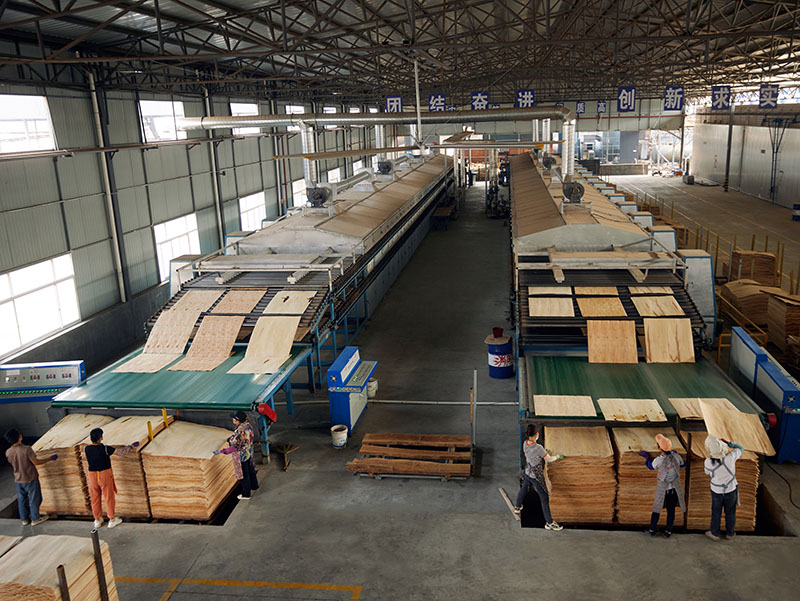
A heating section can be long and still underdeliver if the effective “processing area” is limited. In a continuous roller-based Veneer Drying System, output is not determined by heating length in isolation. Buyers typically evaluate capacity using a combination of:
Working width (how much veneer can be transported across the line)
Deck count (how many layers of veneer pass through simultaneously)
Conveyor speed range (how fast veneer travels through the heating zone)
Residence time (how long veneer stays in the heated area)
Moisture reduction target (for example, drying fresh veneer to about 10% moisture)
Drying temperature range and controllability
When species and thickness change frequently, the equipment must allow operators to adjust speed and temperature so final moisture stays consistent. That is why many buyers treat automation and controllability as “capacity insurance,” not optional extras.
The goal here is not to produce a single universal formula for every factory. Instead, the method below helps you translate a production target into a workable configuration and a preliminary heating length that can be validated during technical discussion.
Start with the output you need for Drying Veneer:
m³ per hour (m³/h) or m³ per 24 hours (m³/24h)
operating hours per day
veneer thickness range and incoming moisture range
target final moisture
Example logic: if a mill needs 72 m³ per day and runs 24 hours, the average target is 3 m³/h.
Working width and decks determine how much veneer can physically move through the line at once. This is why adding decks or width can raise output without extending heating length.
For procurement teams comparing options, it helps to review a manufacturer’s published models and see how width and decks relate to stated capacity. Shine Machinery publishes roller dryer configurations such as:
3 m working width with 2 decks
4.5 m working width with 4 decks
For buyers reviewing a roller-based veneer dryer machine, this is also the moment to confirm whether sections and decks can be added or deducted to match output needs.
Residence time depends on veneer thickness and moisture conditions. When the plant processes mixed thicknesses, the dryer must be able to “stretch” or “shrink” residence time by changing conveyor speed and adjusting temperature so the final moisture stays within the target window.
Shine Machinery describes dryers using automatic temperature control and frequency conversion speed regulation, which allows operators to adjust temperature and transmission speed according to veneer thickness and moisture content.
Once a realistic residence time is selected, a preliminary heating length can be estimated:
Heating Length (m) = Conveyor Speed (m/min) × Heating Residence Time (min)
This is a planning calculation, not a guarantee. Final performance is affected by feeding efficiency, deck utilization, moisture removal strategy, and how consistently the line runs.
A direct comparison between two published roller configurations makes the point clearly: a shorter heating length can still correspond to higher stated throughput when width and decks increase.
Below is a consolidated comparison of two Shine Machinery models commonly reviewed for plywood veneer drying.
| Specification | GTH30-48 | GTH45-40 |
|---|---|---|
| Dryer type | Roller dryer | Roller dryer |
| Working width | 3 m | 4.5 m |
| Decks | 2 | 4 |
| Heating area length | 44 m | 36 m |
| Cooling area length | 4 m | 4 m |
| Stated drying capacity | 70–80 m³/24h | 180–200 m³/24h |
| Veneer thickness range | 0.6–8 mm | 0.6–8 mm |
| Conveyor speed range | 5–22 m/min | 5–22 m/min |
| Drying temperature | 140–200°C adjustable | 140–200°C adjustable |
| Final moisture reference | Fresh veneer to about 10% | Fresh veneer to about 8–10% |
The takeaway for sizing is simple: length must be evaluated together with width and decks, because those parameters define how much veneer is being processed per unit of time.
For readers who want to review a detailed product page for a roller configuration, one example is the Veneer Roller Dryer Machine listing.

When the product mix changes often, the dryer should not force your team into “one-speed drying.” In practice, operators need the ability to tune speed and temperature to prevent under-drying, which raises gluing risk, or over-drying, which can increase surface defects and yield loss.
Shine Machinery describes roller dryers equipped with:
Frequency conversion speed regulation to adjust feeding and transmission speed
Automatic temperature control to adjust drying temperature for different conditions
A heat exchange structure designed for efficient heat transfer and lower heat loss
On a separate high-efficiency product description, Shine Machinery also presents a step-by-step heat exchange system and waste heat recovery technology as part of its energy-saving approach.
In addition, a plywood veneer drying product description introduces a moisture exhaust system installed on the top of the dryer to discharge moisture from inside the dryer to the outside of the workshop, particularly noted for cold areas, to help avoid pre-condensation from inside and outside temperature differences and to keep the interior dry and pressure balanced.
A Low Cost Veneer Dryer decision should be based on total operating logic, not equipment price alone. In published specifications for Shine roller dryers, the operating cost is referenced as $6–12/m³ (Labor + Fuel + Electricity), with costs depending on site conditions.
A practical procurement checklist for a cost-focused Veneer Drying System usually includes:
Heat source options (Shine describes heating by steam boiler, thermal oil heater, or biomass burner)
Control strategy (automatic temperature control and speed regulation)
Heat exchange approach (step-by-step heat exchange and waste heat recovery are presented for energy efficiency)
Material handling add-ons if required for labor reduction (Shine’s biomass burner veneer dryer page describes integration with an automatic veneer feeder and an automatic collection system)
For many plywood plants, biomass heating is evaluated because wood waste and bark can be used as fuel. Shine’s product description for the biomass solution states that crushed wood waste and bark can be used as fuel, helping reduce drying costs and supporting waste utilization at the plant level.
One reference page for this configuration is the Biomass Burner Veneer Dryer.
In sourcing discussions, buyers often compare a roller-based veneer dryer machine with a Vertical Veneer Dryer layout. The most important point is not which category is “better,” but whether the transport path, footprint, and operating style match your factory constraints and your product mix.
For many procurement teams, the selection questions remain consistent across dryer types:
Can the line hit the required output when thickness varies within 0.6–8 mm?
Can operators control conveyor speed and temperature to maintain consistent final moisture?
How does the configuration scale—by adding decks, adding sections, or both?
Keeping the discussion output-based instead of length-based helps prevent oversizing or capacity shortfalls.
For an accurate proposal discussion, buyers typically provide:
Target output (m³/h or m³/24h)
Veneer thickness range
Incoming moisture condition and final moisture target
Preferred heat source (steam, thermal oil, or biomass)
Available installation space and line layout constraints
Shine Machinery presents roller dryer configurations with customizable working width, working length, and layers or decks to meet specific drying capacity requirements.
If you are comparing suppliers as a China veneer dryer manufacturer option, often searched alongside terms such as China veneer dryer supplier, you can start by reviewing published specifications and then confirm your target output and operating conditions directly on the official site: www.veneersdryer.com.
Because output in plywood veneer drying is affected by working width, deck count, and speed control. A longer heating zone does not automatically mean higher capacity.
Define the required m³/h or m³/24h, choose an appropriate width and deck configuration, estimate the needed residence time, then use Heating Length = Speed × Residence Time to obtain a preliminary heating length.
Shine Machinery describes frequency conversion speed regulation and automatic temperature control, enabling adjustments based on veneer thickness and moisture content.
The GTH30-48 and GTH45-40 roller dryer configurations list a veneer thickness range of 0.6–8 mm.
A published reference lists $6–12/m³ (Labor + Fuel + Electricity); actual cost depends on site conditions.
Not necessarily. Layout choice depends on factory constraints and operating preferences. Buyers typically compare footprint, transport path, and controllability against required output.
Copyright By © Shandong Shine Machinery Co.,Ltd
 ไทย
ไทย Indonesia
 Melayu
 Tiếng Việt
 Pусский
 Portugues
 Français
 Deutsch
 日本語
日本語 한국어
한국어 العربية
 Italiano
 Polski
 Nederlands
 Türk dili
 हिन्दी
 Ελληνικά
 Svenska
 Español


