A 15 m³/h nameplate might seem like the final goal when picking a veneer dryer, but for actual plywood production, it's really just the beginning. When comparing veneer dryers, buyers need to look past simple hourly output. Instead, they should examine the heat source, deck configuration, veneer thickness, target moisture levels, installed power, and the cost per cubic meter of dried veneer. For mills evaluating Shine Machinery models, the real question isn't merely, 'Can this machine hit 15 m³/h?' but rather, 'Is the veneer dryer machine set up to deliver consistent moisture content at a sustainable cost over time?'
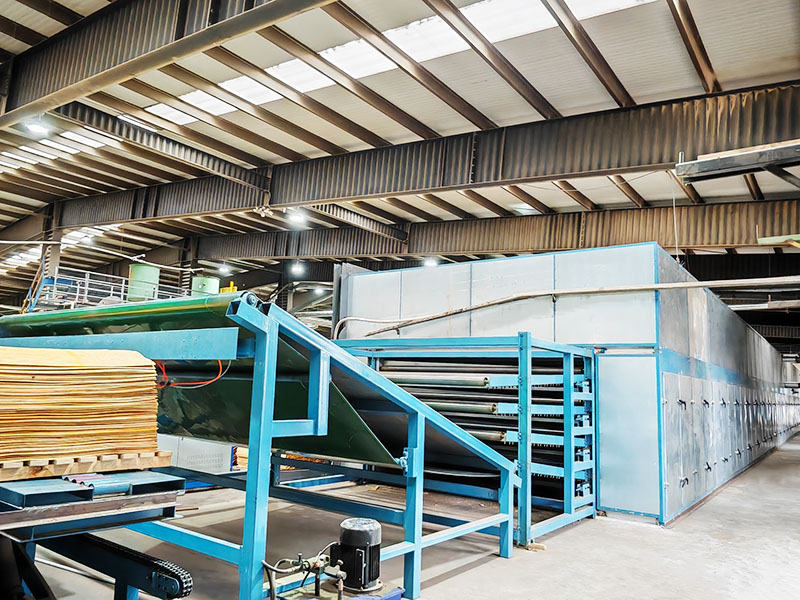
In veneer drying, capacity is shaped by several linked variables: wood species, veneer thickness, inlet moisture, target final moisture, working width, heating area, cooling area, and transport speed. Shine Machinery product pages often show veneer thickness ranges like 0.8–8 mm on various roller models, with veneer transport speeds typically listed at 5–22 m/min. Several models also aim for dried veneer moisture content around 8–10% or about 10%, depending on the specific configuration.
This means two machines with similar headline output can perform quite differently in daily operation. A mill drying thicker core veneer, high-moisture fresh veneer, or mixed species might require a longer heating section, more decks, or a different heat source strategy than a mill drying thinner material. For procurement teams searching terms such as China veneer dryer manufacturer, China veneer dryer supplier, or China top veneer dryer factory, a smarter comparison starts with the entire drying task, not just a single capacity figure.
A roller veneer dryer can be configured with different deck counts to match production requirements. Shine Machinery’s product range includes single-deck, two-deck, four-deck, and six-deck veneer dryer options. More decks can increase processing volume without simply extending the production line indefinitely, which is why deck configuration is crucial for ROI considerations.
| Example model | Decks | Working width | Heating area | Cooling area | Listed capacity | Actual electricity consumption |
|---|---|---|---|---|---|---|
| GTH30-24 | 1 | 3 m | 20 m | 4 m | About 15–18 m³/day | About 46 kWh/hour |
| GTH30-32 | 2 | 3 m | 28 m | 4 m | 40–45 cbm/day | About 95 kWh/hour |
| GTH30-36 | 4 | 3 m | 32 m | 4 m | 110 m³/day | About 149 kWh/hour |
| GTH612-42 | 6 | 6120 mm | 36 m | 6 m | 15–18 m³/hour | About 410 kWh |
The table above illustrates why “15 m³/h” should be seen as a production planning threshold, not a complete investment answer. A six-deck veneer dryer machine is often suitable when a mill needs very high hourly output, while a four-deck or two-deck system may better fit different production scales. The ideal choice depends on your production rhythm, available space, target moisture, and the needs of your downstream plywood line.
Shine Machinery product information lists several heat medium options for veneer dryers, including thermal oil, steam, gas, and hot air. Many product pages also detail biomass burner configurations that use waste wood as the heating material, with drying temperatures commonly set around 140–200°C adjustable or 140–180°C adjustable, depending on the specific model.
For buyers, selecting a heat source should be treated as a cost model decision. A biomass veneer dryer setup can be particularly attractive where waste wood is readily available from peeling or plywood production. Other mills might evaluate steam, thermal oil, or gas based on existing plant utilities, local fuel prices, maintenance practices, and environmental regulations. The goal isn't to pick a heat source out of habit, but to match it effectively with the target deck count and daily production load.
Shine Machinery pages provide comprehensive drying cost figures such as $6–12/m³ for several roller veneer dryer models, covering labor, fuel, and electricity. Another product page indicates a composite veneer drying cost of approximately $10/m³. These figures make cost per cubic meter a practical metric when comparing a veneer dryer machine, especially when energy consumption accounts for a significant portion of production expenses.
An extremely fast veneer drying machine is only truly valuable if the dried veneer is perfectly ready for the subsequent process. Shine Machinery roller dryers typically include automatic temperature control and speed regulation systems designed to ensure consistent moisture content. Product descriptions also highlight that veneer is clamped by upper and lower steel tube rollers, preheated, and then dried by high-pressure hot air blown onto both sides through a hot jet box.
In plywood production, inconsistent moisture can wreak havoc on gluing, pressing, sorting, and storage. Industry research consistently shows veneer drying as a major energy-consuming stage in wood processing, which further emphasizes the need to balance precise moisture targets with efficient energy use. For this reason, buyers should inquire how the veneer dryer machine will handle their actual mix of veneers, rather than judging the line solely by its maximum speed.
Simply opting for a lower purchase price doesn't always translate into a lower long-term cost. A mismatched wood drying machine might lead to more passes, additional sorting, higher fuel consumption, or slower downstream production. Conversely, a correctly matched veneer dryer can establish a clearer cost structure because buyers can compare capacity, electricity consumption, heating method, and target moisture levels before making a commitment.
A practical ROI review should encompass:
Target output: Daily and hourly veneer volume, not just peak capacity.
Material range: Veneer thickness, wood species, and inlet moisture characteristics.
Deck count: One, two, four, or six decks, chosen based on actual production demand.
Heat source: Biomass burner, thermal oil, steam, gas, or hot air, aligned with plant conditions.
Drying cost: Comprehensive cost per cubic meter, including labor, fuel, and electricity.
Installation planning: Shine Machinery pages mention typical installation periods, such as 30–40 days for two-deck roller core veneer drying machines and 40–50 days for four-deck veneer dryer installations.
Training and service: Product pages detail worker training post-installation, online service, video guides, technical exchange, and even door-to-door service when necessary.
This comprehensive approach helps buyers evaluate a veneer dryer as a crucial production asset, not merely a machine quote. It also clarifies why the 15 m³/h level is best seen as a capacity requirement that absolutely must be supported by the right heat source, deck structure, and operational plan.
Shandong Shine Machinery Co., Ltd, and Shine Machinery showcase multiple veneer dryer machine models on www.veneersdryer.com, including roller veneer dryers, plywood dryer machines, core dryer machines, high-efficiency veneer dryer machines, and six-deck veneer dryer configurations. Buyers can use these detailed product pages to compare working width, number of decks, heating area, cooling area, veneer thickness range, drying temperature, transport speed, total power, and actual electricity consumption.
For mills considering a high-output line, the GTH612-42 six-deck veneer dryer lists 15–18 m³/hour capacity, a 6120 mm working width, a 36 m hot air section, a 6 m cold air section, and aims for moisture content from fresh veneers to within 12%. For smaller or mid-scale production, the listed four-deck and two-deck options provide alternative capacity levels. The optimal investment decision comes from carefully matching these parameters to the buyer’s actual plywood production plan.
Not necessarily. While a 15 m³/h veneer dryer suits high-output production, smaller mills might find a two-deck or four-deck configuration more appropriate. The right choice depends on specific veneer thickness, moisture content, available space, heat source, and the overall production schedule.
Shine Machinery product pages detail heat mediums and options including thermal oil, steam, gas, hot air, and biomass burner configurations that utilize waste wood on various models.
Many Shine roller veneer dryer models specify veneer thickness ranges around 0.8–8 mm, though some product information may also reference ranges such as 0.6–8 mm depending on the particular model.
Deck count significantly impacts output volume, factory space utilization, installed power requirements, and the overall production rhythm. A six-deck veneer dryer can support higher hourly capacity, whereas systems with fewer decks may be better suited for smaller daily production targets.
Buyers should compare the comprehensive drying cost per cubic meter, which includes labor, fuel, and electricity. Shine Machinery pages often list figures such as $6–12/m³ for several veneer dryer configurations, providing a practical benchmark.
Copyright By © Shandong Shine Machinery Co.,Ltd
 ไทย
ไทย Indonesia
 Melayu
 Tiếng Việt
 Pусский
 Portugues
 Français
 Deutsch
 日本語
日本語 한국어
한국어 العربية
 Italiano
 Polski
 Nederlands
 Türk dili
 हिन्दी
 Ελληνικά
 Svenska
 Español


