Switching a plywood line from eucalyptus to birch often triggers a familiar purchasing question: “What’s the veneer dryer capacity in m³ per hour?” The problem is that a single capacity figure can hide too many variables—veneer thickness, initial moisture, target moisture, transport speed, and the actual dryer layout.
A more dependable first step is simpler: start with deck number. In a multi-deck roller veneer dryer, decks define how many parallel transport levels are available. From there, buyers can validate real throughput by checking working width, heating-section length, speed range, and moisture targets for producing stable Dry Veneer.

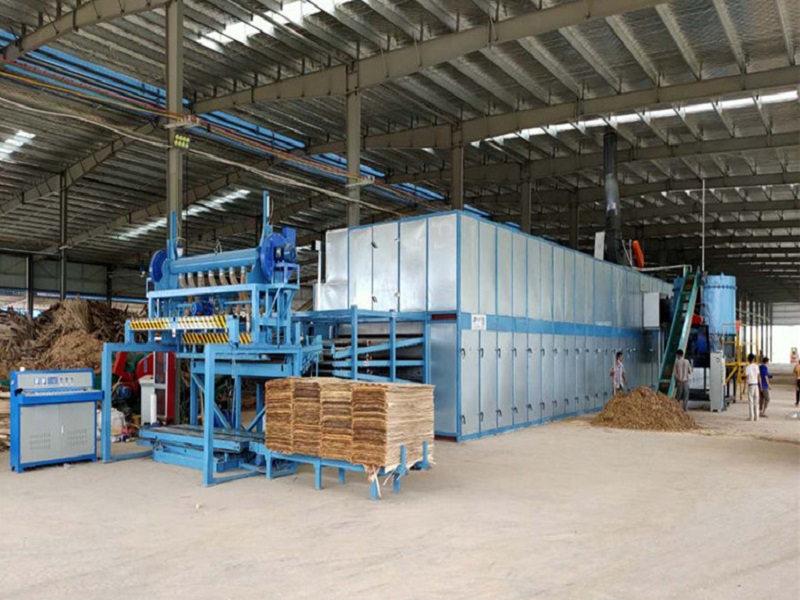
In a roller veneer dryer, a “deck” is one transport level where veneer sheets move through the drying zone. A 2-deck machine provides two parallel levels; a 4-deck provides four; a 6-deck provides six. That sounds straightforward, but the procurement mistake is assuming that more decks automatically mean proportionally higher capacity.
Deck count is still the best first filter because it quickly narrows the equipment category and the line concept. Once the deck configuration is chosen, it becomes far easier to verify whether a supplier’s capacity statement matches the complete drying system—including working width, heating length, cooling length, and speed regulation.
For buyers comparing options, Shine Machinery publishes capacity ranges by wood species and deck category (1, 2, 4, and 6 decks) for eucalyptus and birch, under a thickness scope of 0.8–8 mm, with fresh veneers reduced from above 70% moisture to about 0–10% (for those listed species).
When manufacturers publish capacity ranges, they are best read as equipment-category guidance, not a universal guarantee for every production condition.
Shine Machinery’s published ranges show birch and eucalyptus capacities listed side-by-side across deck configurations:
1 deck | 0.5–2.0 | 0.6–2.2 |
2 deck | 1.0–3.3 | 1.2–3.8 |
4 deck | 2.0–9.0 | 2.3–10.0 |
6 deck | 15–17 | 15–18 |
The practical takeaway for a mill switching species is not “birch is always faster.” The takeaway is that capacity must be tied to a defined configuration and operating target. That is exactly why experienced buyers begin the conversation with deck number and then validate the rest of the layout.
After deck count, the next two checks that shape real output are:
Working width (how much veneer can be carried across each deck)
Heating area length (how long veneer remains in the heated zone)
These interact with transport speed. A wide machine can carry more veneer at the same speed. A longer heating section increases exposure time at the same speed. Either one can shift the real-world output of a core dryer or veneer dryer line.

These interact with transport speed. A wide machine can carry more veneer at the same speed. A longer heating section increases exposure time at the same speed. Either one can shift the real-world output of a core dryer or veneer dryer line.
To see why, compare two published Shine Machinery models:
GTH30-52: 4 deck, working width 3.0 m, heating area length 48 m, cooling area length 4 m, speed 5–22 m/min, drying capacity 7–8 m³/h, moisture target fresh veneer to about 8–10%, drying temperature 140–200°C adjustable, temperature control accuracy ±5°C, overall dimension 63 m × 11 m × 3.5 m.
GTH612-42: 6 deck, working width 6120 mm, hot air section 36 m (18 sections), cold air section 6 m, speed 5–22 m/min, drying capacity 15–18 m³/h, moisture content target fresh veneers to within 12%, drying 160–180°C adjustable, overall dimension 65453 × 22080 × 5500 mm.
Notice what this implies for birch production planning: a 6-deck machine can be wider while having a shorter hot-air section than some 4-deck layouts. That is why deck count should be the start of the discussion—not the end.
A fast way to challenge a headline capacity number is to translate the layout into time in the heating zone.
Example logic (illustrative using published dimensions): if a veneer dryer has a 48 m heating area and runs at 10 m/min, veneer spends about 4.8 minutes in the heating section. At 15 m/min, it drops to about 3.2 minutes. These are not promises of final moisture; they are a reality check on whether the process window is plausible for the thickness range and moisture reduction target.
This is also where automatic controls matter. Shine Machinery describes roller veneer drying machines that integrate automatic temperature control and frequency conversion speed regulation, allowing speed and temperature to be adjusted according to veneer thickness and moisture targets.
“Under which veneer thickness range, moisture reduction target, heating length, working width, and speed setting is the stated m³/h achievable?”
For procurement teams, the capacity question becomes more actionable when rewritten in that form.
Published hourly capacity is useful only when buyers convert it into shift planning and leave room for normal interruptions.
Using the published GTH30-52 figure (7–8 m³/h) as an example:
In an 8-hour shift, nominal output would be 56–64 m³.
But purchasing decisions should be based on acceptable dried output, not only nominal throughput. Feeding rhythm, handling, and moisture consistency targets can all reduce the volume that qualifies as usable Dry Veneer.
This is why many buyers prefer to start with deck configuration and then validate the full system: decks, width, heating length, speed range, temperature range, and the stated final moisture content target.
When a line switches from eucalyptus to birch, the most efficient quotation conversations are data-driven. Buyers typically confirm:
Wood species to be dried (birch, eucalyptus, or both)
Veneer thickness and size range (Shine Machinery lists 0.8–8 mm for certain models)
Incoming veneer moisture condition (often listed as fresh veneers above 70% in published tables)
Target final moisture content (examples in published model parameters include 8–10% or within 12%, depending on model)
Required daily or shift output (in acceptable dried volume)
Workshop length/width constraints (important when comparing footprints like 4-deck vs 6-deck)
Preferred heating method (Shine Machinery describes configurations that can be heated by a steam boiler, thermal oil heater, or biomass burner, and also describes using waste wood as fuel in certain configurations)
For buyers who want to review a representative 4-deck product category, see the product page for the 4 Deck Veneer Dryer. For a parameter table example of a 4-deck core veneer model, see the Core Veneer Dryer listing.
In plywood manufacturing, drying is a high-leverage step: uneven moisture can complicate later stages such as gluing. Shine Machinery describes roller drying equipment where veneer is transported through heating and cooling sections, with speed and temperature control used to keep the final moisture more consistent.
It is also important in procurement conversations to distinguish a roller veneer dryer from other drying arrangements sometimes discussed in the market—such as a Veneer Hot Press Dryer—because the mechanical layout and throughput logic differ.
To compare alternative deck formats, buyers often start by reviewing model parameter pages such as the 2 Deck Veneer Core Dryer Machine and the 6 deck veneer dryer, then mapping them to workshop space and output requirements.
When species changes—from eucalyptus to birch—the safest way to avoid disappointing commissioning results is to anchor the discussion in configuration first:
Start with deck number (transport levels)
Validate working width and heating/cooling lengths
Confirm speed range and temperature range
Tie the capacity figure to thickness range and final moisture target for Drying Veneer
Capacity claims become meaningful only when they are attached to these declared conditions. For buyers who want to explore equipment pages and parameter tables directly, Shine Machinery’s product information is available at www.veneersdryer.com.
Deck number is a strong starting point, but selection should also confirm working width, heating length, speed range, temperature range, and the target moisture content for Dry Veneer.
Because a veneer dryer’s output depends on the full configuration—especially working width and heating-section length—plus the thickness range and moisture reduction target used for the stated capacity.
Depending on the model, published parameters include targets such as fresh veneer dried to about 8–10% (GTH30-52) or fresh veneers to within 12% (GTH612-42).
The GTH30-52 listing shows a veneer thickness and size range of 0.8–8 mm.
Both GTH30-52 and GTH612-42 list a veneer transport speed range of 5–22 m/min.
Shine Machinery describes roller veneer drying machines that can be heated by a steam boiler, thermal oil heater, or a biomass burner, and also describes the use of waste wood as a fuel source in certain configurations.
Copyright By © Shandong Shine Machinery Co.,Ltd
 ไทย
 Indonesia
 Melayu
 Tiếng Việt
 Pусский
 Portugues
 Français
 Deutsch
 日本語
 한국어
 العربية
 Italiano
 Polski
 Nederlands
 Türk dili
 हिन्दी
 Ελληνικά
 Svenska
 Español



