A common purchasing mistake in plywood lines is treating the biomass burner and the thermal oil heater as a fixed bundle. In practice, whether you need a thermal oil heater depends on the heating architecture of the veneer dryer you are buying—especially whether your system is configured for direct hot air or for thermal oil circulation.
This guide uses published specifications and configurations from Shine Machinery’s veneer drying equipment to help buyers compare options, align capacity to production goals, and avoid paying for heat equipment that your veneer dryer does not actually require.

When procurement teams say “we need a thermal oil heater,” they are usually describing an indirect heat-transfer plan. But many plywood plants evaluate a biomass burner direct hot air veneer dryer specifically to simplify the heat path.
In a direct hot air layout, the biomass burner supplies heat into the hot air system used for Drying Veneer, without requiring a separate thermal oil circulation loop.
Shine Machinery describes biomass heating as a heat source option for its core dryer and multi-deck veneer dryer configurations. For buyers, the key point is simple: if your veneer dryer is specified as direct hot air, a thermal oil heater is not automatically part of the system.
If you are comparing models, start from the dryer’s heat path and confirm what is included in the quotation and what is optional—especially around the burner, hot air circulation, and control system.
A thermal oil veneer dryer uses a different arrangement: heat is generated and transferred through thermal oil, and then used to warm the drying air. Shine Machinery also publishes a two-deck configuration described as a heat thermal oil veneer dryer machine.
For some factories, this indirect approach may be evaluated for layout compatibility or when a plant already plans around thermal oil heating. The important procurement logic is that thermal oil heating is a configuration choice, not an automatic requirement simply because you are buying a veneer dryer.
Shine Machinery lists multiple heat sources across its veneer drying equipment:
Biomass burner
Thermal oil furnace
Natural gas
Steam
In the same product family, buyers can also select different degrees of automation (manual, semi-automatic, and fully automatic veneer feeding and collecting systems). This matters because heat source and automation should be evaluated together: stable Dry Veneer output depends on coordinated airflow, temperature stability, and conveyor speed—not only on the fuel type.
To see a broader view of available configurations, many buyers start from the manufacturer’s main veneer dryer range and then narrow down to a model length, deck count, and heat source that match their throughput targets.
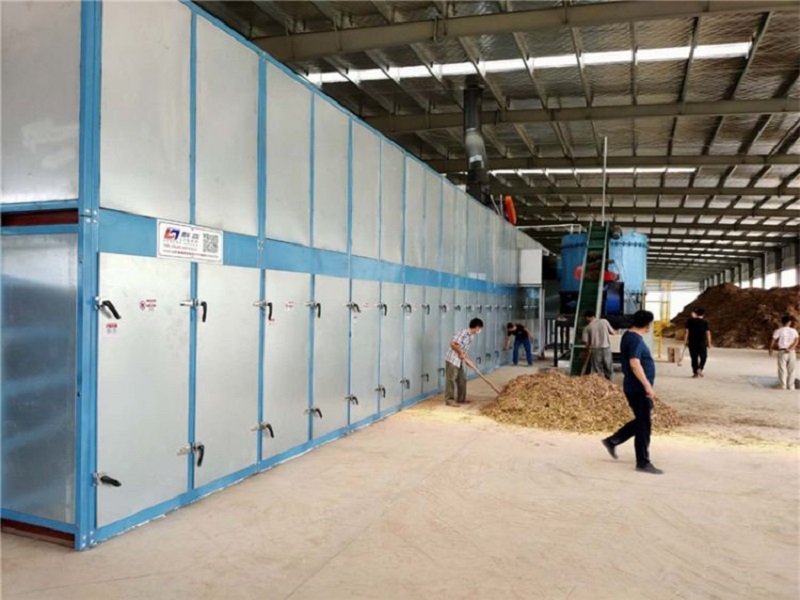
A Veneer Drying Process is not only “add heat and wait.” The operating results you see—flat sheets, controlled moisture, and stable color—come from how the Wood Veneer Machine coordinates transport, airflow, and control.

Shine Machinery’s multi-deck designs allow multiple layers of veneer to pass through the dryer at the same time. Buyers can choose different automation levels for feeding and collecting depending on labor planning and production rhythm.
In the published parameters for the GTH30-20 model, the machine separates a heating area and a cooling area (16 m heating area length and 4 m cooling area length). This “heat then cool” structure is practical for handling veneer continuously while preparing sheets for downstream handling and stacking.
Shine Machinery describes automatic temperature and speed regulation, and also describes a control approach where the traction motor’s frequency converter works with temperature control so the machine can adjust transmission speed and temperature according to veneer thickness and moisture content requirements. In day-to-day Drying Veneer work, this is the part buyers should focus on because it directly influences final moisture consistency.
The company also describes the use of new axial flow fans in hot air and cold air fan positions, emphasizing reduced installed power and lower operating costs in later operation.
When procurement teams debate thermal oil vs biomass, the fastest way to move forward is to compare real specifications—working width, deck count, transport speed range, control accuracy, and power.
One example is Shine Machinery’s 20 m automatic veneer dryer machine (model GTH30-20). Buyers often reference this model because the published parameters are detailed and procurement-friendly.
For this configuration, the published technical parameters include:
Working width: 3.0 m
Deck: 4
Roller material: Q235B, φ102 special shaft tube
Veneer thickness range: 0.6–8 mm
Heating material & temperature: waste wood, 140–200°C adjustable
Temperature control accuracy: ±5°C
Veneer transport speed: 5–22 m/min
Drying capacity: 2.5 m³/h
Fresh veneer to about: 8–10% moisture
Total power: 145.5 kW
Actual electricity consumption: about 100 kWh per hour
Biomass burner: 6-ton biomass burner (1 unit), power 16.5 kW
If you want the complete parameter table as published, refer to the 20m automatic veneer dryer machine listing and confirm which options are included in your selected automation package.
Shine Machinery also publishes parameters for a two-deck thermal oil veneer dryer machine. That configuration lists:
Working width: 3 m
Deck: 2
Roller material: Q235B, φ89 steel pipe
Heating area length: 40 m
Cooling area length: 4 m
Veneer thickness: 0.8–8 mm
Fresh veneer to about: 10% moisture
Drying temperature: 140–200°C adjustable, temperature control accuracy ±5°C
Drying capacity: 60–70 m³/24 h
Veneer transport speed: 5–22 m/min
If your internal standard is “thermal oil only,” it is worth re-checking whether that is a process necessity or simply a legacy preference. In many purchasing discussions, the real requirement is stable drying temperature control and consistent moisture, which can be achieved through different heating architectures depending on the model.
For the published thermal oil configuration details, see the heat thermal oil veneer dryer machine parameters.
For factories building a budgeting model, Shine Machinery also publishes a 48 m veneer drying machine positioned around productivity and drying cost.
The published description includes:
Veneer thickness range: 0.6–8 mm
Drying capacity: around 70 m³ per day
Roller material: Q235B, φ102 special shaft tube
Heat source: biomass burner
Composite cost: about $6–12 per cubic meter
In procurement terms, this kind of cost range is most useful as a starting point for local modeling, because actual cost outcomes will still be shaped by fuel preparation, operator routines, and electricity pricing.
Confirm the heating architecture first: direct hot air or thermal oil. Don’t order a thermal oil heater “by default” when your veneer dryer is specified for direct hot air heating.
Match deck count and working width to production rhythm: multi-deck designs are often evaluated for continuous Drying Veneer flow.
Check control targets, not only maximum temperature: published models list 140–200°C adjustable and ±5°C temperature control accuracy.
Use the transport speed range as an operating lever: published models list 5–22 m/min, which matters for different veneer thicknesses.
Clarify automation scope: manual, semi-automatic, or fully automatic feeding and collecting changes labor planning and line balance.
For buyers who are also reviewing a Veneer Hot Press Dryer in the same project, it helps to keep terminology clean: a veneer dryer is specified and purchased around hot air heating, airflow, conveyance, and moisture targets; other equipment should be quoted and evaluated separately to avoid scope confusion.
To compare configurations or request model selection support, many international buyers start from Shine Machinery’s product pages and then specify wood species, veneer thickness range, and target moisture requirements via www.veneersdryer.com.
Not automatically. If the veneer dryer is configured for direct hot air heating using a biomass burner, the thermal oil heater is not inherently required as part of that heating path.
Shine Machinery lists heat source options including biomass burner, thermal oil furnace, natural gas, and steam for its core veneer dryer configurations.
Published configurations list 140–200°C adjustable drying temperature with ±5°C temperature control accuracy.
The published veneer transport speed range is 5–22 m/min.
The GTH30-20 listing describes drying fresh veneer to about 8–10% moisture.
The 48 m veneer drying machine description states a composite cost of about $6–12 per cubic meter
Copyright By © Shandong Shine Machinery Co.,Ltd
 ไทย
 Indonesia
 Melayu
 Tiếng Việt
 Pусский
 Portugues
 Français
 Deutsch
 日本語
 한국어
 العربية
 Italiano
 Polski
 Nederlands
 Türk dili
 हिन्दी
 Ελληνικά
 Svenska
 Español



