A small plywood workshop can often start Drying Veneer quickly—until the first layout drawing reveals a hard limit: the veneer dryer must physically fit, and the supporting equipment must be placed and powered safely. That is why experienced buyers treat footprint, electrical load, and the full drying line configuration as the first decision, and the machine price as the last.

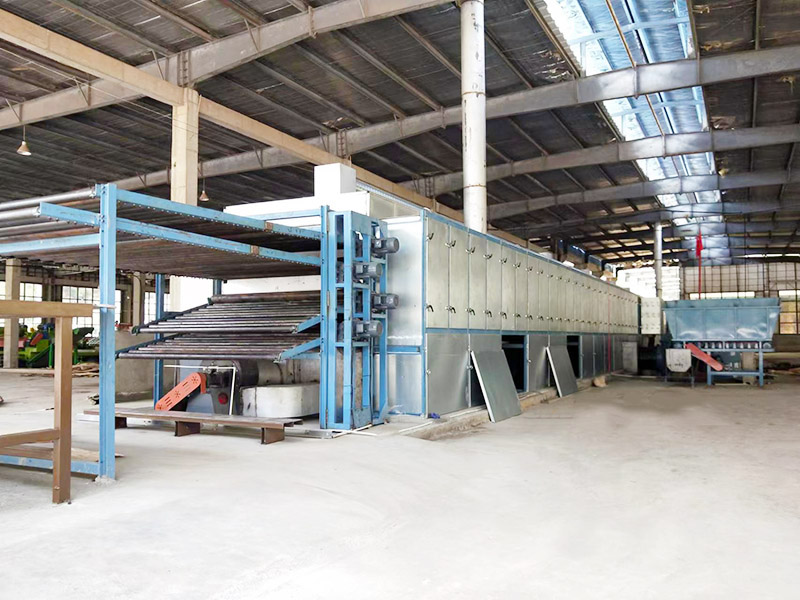
For a small workshop, a veneer dryer project succeeds when the equipment layout supports stable material flow and safe access—not when the quotation looks attractive on paper. The footprint affects:
Material handling: infeed and outfeed space for fresh and dried sheets.
Service access: clearance for inspection, adjustment, and routine maintenance.
Utility routing: electrical cabinets, cables, and space for connecting fans, motors, and heating equipment.
Commissioning speed: fewer site changes typically mean fewer delays once the equipment arrives.
Shine Machinery publishes complete dimensional and electrical parameters for two practical configurations that buyers often compare early: GTH30-32 (2 decks) and GTH30-52 (4 decks). Using those numbers as a starting point makes layout conversations faster and more accurate.
Below is a specification-focused comparison that helps buyers align workshop dimensions with expected throughput and utility requirements.
| Parameter | GTH30-32 | GTH30-52 |
|---|---|---|
| Working width | 3 m | 3.0 m |
| Decks | 2 | 4 |
| Heating area length | 28 m | 48 m |
| Cooling area length | 4 m | 4 m |
| Veneer thickness | 0.8–8 mm | 0.8–8 mm |
| Drying temperature | 140–200°C adjustable | 140–200°C adjustable |
| Temperature control accuracy | ±5°C | ±5°C |
| Transport speed | 5–22 m/min (16A chain) | 5–22 m/min (16A chain) |
| Final moisture target | fresh veneer to about 10% | fresh veneer to about 8–10% |
| Drying capacity | 40–45 m³/24h | 7–8 m³/h |
| Total installed power | 86.5 kW | 284.5 kW |
| Actual electricity consumption | about 61 kWh per hour | about 200 kWh per hour |
| Overall space / dimension | 38 m × 9 m × 3 m | 63 m × 11 m × 3.5 m |
A simple footprint check also highlights the practical difference in covered area:
GTH30-32: 38 × 9 ≈ 342 m²
GTH30-52: 63 × 11 ≈ 693 m²
For many small plants, that length difference (38 m vs 63 m) is the “yes or no” factor. Even before you talk about price, the layout must allow straight-line material flow through the heating and cooling sections, plus working room around the machine.
A Wood Veneer Machine project is rarely just the dryer body. Both configurations are specified with defined airflow equipment, traction motors, and heating equipment. These items drive your electrical planning and influence how compact the final workshop layout can be.
GTH30-32 is specified with a 4-ton biomass burner (electrical power: 16.5 kW).
GTH30-52 is specified with a 10 ton biomass burner (electrical power: 16.5 kW).
Because the heating system is part of the specified configuration, buyers typically map burner placement and service clearance during the initial footprint review—not after the dryer selection.
| Equipment | GTH30-32 | GTH30-52 |
|---|---|---|
| Hot air blowers | 5.5 kW × 7 pc | 4 kW × 48 pc |
| Cold air blower(s) | 5.5 kW × 1 pc | 4 kW × 4 pc |
| Air intake fan(s) | 7.5 kW × 2 pc | 15 kW × 2 pc |
| Traction motor(s) | 7.5 kW × 2 pc (frequency control) | 5.5 kW × 4 pc (frequency control) |
In small workshops, this is often where planning becomes “real.” A four-deck core dryer can deliver higher stated hourly output, but it also brings a higher installed power figure and a larger set of fans and blowers to install, wire, and service.

Shine Machinery also lists an optional waste heat recovery system for the GTH30-32 configuration, with energy savings of 25% or more.
In the Veneer Drying Process, the operational objective is consistent final moisture—because downstream plywood manufacturing typically depends on stable, predictable veneer behavior.
Both GTH30-32 and GTH30-52 are specified with:
140–200°C adjustable drying temperature
±5°C temperature control accuracy
Automatic temperature control and speed regulation system
5–22 m/min veneer transport speed
Support for 0.8–8 mm veneer thickness
If a buyer is evaluating a veneer dryer for a small workshop, these control ranges matter as much as capacity numbers. They set the operating “window” for Drying Veneer across different thicknesses within the specified range.
Shine Machinery describes a modular design for its veneer dryer machine installations, with a typical installation period of approximately 40 days (depending on site conditions, equipment scale, and customer requirements). For a small workshop aiming for fast production, the key is to make the site “installation-ready” before the equipment arrives.
Confirm workshop size: verify usable length, width, and clear height against the selected configuration (e.g., 38 × 9 × 3 m or 63 × 11 × 3.5 m).
Lock the configuration: deck count, working width, and heating/cooling lengths.
Prepare utilities: align electrical capacity with installed power (86.5 kW vs 284.5 kW) and plan cable routing.
Allocate ancillary zones: placement and service clearance for heating equipment and airflow components.
Commission and train: complete commissioning and operator training for stable Dry Veneer output.
For harsher operating regions, Shine Machinery also lists dedicated installation approaches for:
Extreme cold regions of Russia (-35°C): frost protection installation plan
High humidity environments in Southeast Asia: rust prevention reinforcement treatment
Sandstorm areas in the Middle East: fully sealed electrical cabinet installation
Product naming can confuse early-stage procurement. Shine Machinery’s Veneer Hot Press Dryer Machine page presents a configuration that matches the GTH30-52 parameter set (4 decks, 3.0 m working width, 48 m heating area, 63 m × 11 m × 3.5 m overall dimension, and 7–8 m³/h drying capacity).
For buyers, the practical takeaway is to compare the underlying parameters—decks, length, installed power, and throughput—rather than relying on the label alone. If you are budgeting floor space and utilities, those specs determine feasibility.
Before requesting a quotation, procurement teams typically confirm the inputs that make pricing meaningful:
[ ] Available building length, width, and clear height
[ ] Target daily output and whether a 40–45 m³/24h class line is sufficient or a 7–8 m³/h class line is required
[ ] Veneer thickness range within 0.8–8 mm
[ ] Moisture targets (e.g., fresh veneer to about 10% or 8–10%)
[ ] Installed power planning (86.5 kW vs 284.5 kW)
[ ] Expected electricity consumption (about 61 kWh/hour vs about 200 kWh/hour)
[ ] Heating arrangement (4-ton vs 10 ton biomass burner)
[ ] Space for blowers, intake fans, traction motors, and access aisles
For configuration details across lengths, widths, and deck options, buyers often begin with the published model pages and then request a layout-oriented proposal once workshop dimensions are confirmed.
The GTH30-32 is specified with a covered space of 38 m × 9 m × 3 m.
The GTH30-52 is specified with an overall dimension of 63 m × 11 m × 3.5 m.
Both GTH30-32 and GTH30-52 are specified to process veneer thicknesses of 0.8–8 mm.
Both models list 140–200°C adjustable drying temperature with ±5°C temperature control accuracy.
GTH30-32 lists 86.5 kW total power and about 61 kWh per hour electricity consumption. GTH30-52 lists 284.5 kW total power and about 200 kWh per hour electricity consumption.
Shine Machinery states a typical installation period of approximately 40 days, depending on site conditions, equipment scale, and customer requirements.
Copyright By © Shandong Shine Machinery Co.,Ltd
 ไทย
 Indonesia
 Melayu
 Tiếng Việt
 Pусский
 Portugues
 Français
 Deutsch
 日本語
 한국어
 العربية
 Italiano
 Polski
 Nederlands
 Türk dili
 हिन्दी
 Ελληνικά
 Svenska
 Español



