Drying is one of the most cost-sensitive steps in plywood veneer drying. The purchase price of a veneer dryer machine is only part of the equation; the bigger impact often comes from capacity matching, heat source selection, labor needs, and whether your Veneer Drying System can deliver stable moisture conditions for gluing.
Shine Machinery publishes cost and specification benchmarks that buyers can use as a practical starting point: USD 6–12 per m³ composite drying cost for biomass roller designs, and less than USD 8 per m³ for its vertical dryer designs (as stated on the relevant product pages). This article compiles those published points into a selection guide focused on reducing operating cost while keeping veneer handling practical for day-to-day production.

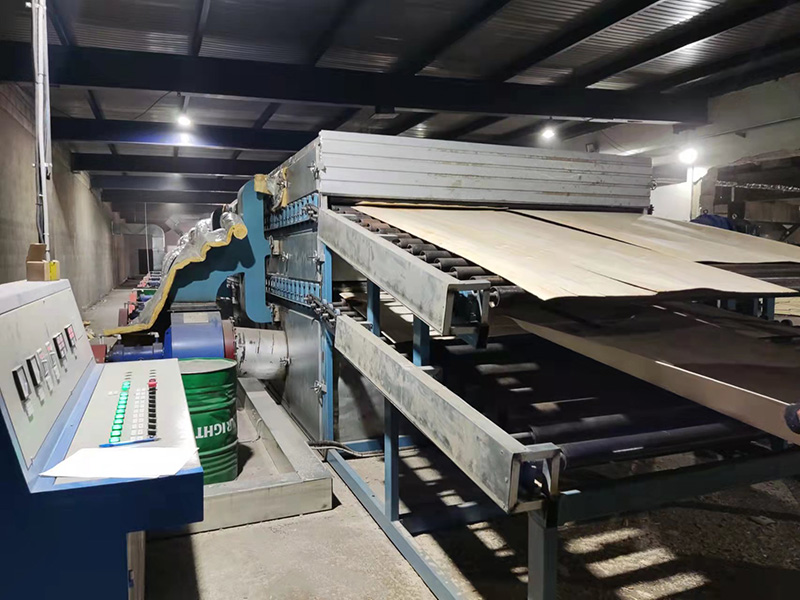
A cost-effective veneer dryer machine is typically the one that fits your production reality—daily output, veneer thickness, and the role the dryer plays (core, partial surface, bottom plate, or general plywood veneer drying). Shine Machinery’s published lineup includes single-deck, two-deck roller systems, and vertical designs aimed at different operating constraints.
The following models are described on Shine Machinery product pages with published capacities that can help buyers frame initial comparisons:
Two-deck 32 m roller dryer: capacity can achieve 1.6 m³ per hour.
40 m two-deck biomass dryer: capacity can achieve 2.5 m³ per hour.
FBH30-13 vertical dryer: 2 m³ per hour.
FBH30-20 vertical dryer: 1.2–1.5 m³ per hour.
For buyers building a procurement shortlist (including those searching terms such as China veneer dryer manufacturer or China veneer dryer supplier), these published figures are useful because they compare “throughput class” rather than focusing only on dryer length.
Roller dryers are often evaluated for continuous flow, steady handling, and broad suitability in plywood veneer drying. Shine Machinery lists a dedicated low-cost roller model with clear baseline specifications.
In Shine Machinery’s product listing for a Low Cost Veneer Dryer Machine, the published parameters include:
Type: Roller veneer dryer
Working width: 3 m
Veneer thickness: 0.8–8 mm
Heating area length: 32 m
Drying capacity: 50–60 m³/day
Heat source: biomass burner (other options available)
These are practical “buyer math” inputs. If your line is producing veneer within the listed thickness range, and your daily demand aligns with the published 50–60 m³/day figure, this kind of configuration can be a direct way to control investment while keeping the Veneer Drying System continuous.
Energy choice is central to operating cost. Shine Machinery describes biomass burner heating for its two-deck roller designs, specifically noting the use of bark and other tree waste as fuels on the product pages for the 32 m and 40 m systems.
For the Two Deck 32m Roller Veneer Dryer, Shine Machinery states it is equipped with a water circulation system intended to save energy and improve efficiency, and that the heat medium can be thermo oil, biomass burner, or steam. The same product page states the composite cost of Shine’s biomass veneer drying machine is USD 6–12 per cubic meter.
For the 40 m system, Shine Machinery’s biomass dryer machine page also states a water circulation system, biomass burner heating, capacity of 2.5 m³ per hour, and the same published composite cost benchmark of USD 6–12 per cubic meter.
Because this “composite cost” is described as including labor, fuel, and electricity (as stated on Shine Machinery’s veneer drying equipment page), it can be used as a planning range when comparing heating options inside a Veneer Drying System.

A Vertical Veneer Drying machine is positioned by Shine Machinery as a lower-cost option intended especially for core plate, partial surface, and bottom plate drying. The same page describes the structure as four parts:
Feeding area
Heating area
Cooling area
Discharging area
Shine Machinery describes this Vertical Veneer Dryer as suitable for the production process of cutting first and then drying, and “especially for the drying of thick veneers.” The vertical tunnel-type core veneer dryer is also described as using hot air circulation, and the vertical core veneer dryer description notes it uses a chain to bring veneer or finished board into the drying room for circulating drying.
Shine Machinery also states several purchase-and-layout reasons buyers consider a Vertical Veneer Dryer:
The equipment uses three-dimensional loading and covers an area of only two-thirds of the roller dryer (as stated on the vertical dryer machine page).
The drying cost is less than $8/m³.
The vertical plywood method increases loading capacity by 30–80% compared with other dryers (as stated on the vertical product pages).
On-site assembly is required, and installation can be arranged according to the customer’s location requirements.
Labor guidance is model-specific: the vertical veneer drying machine page states 2 workers per shift, while the FBH30-20 table lists 3.
For facilities where floor space is the hard constraint, this space-and-loading approach is often evaluated as part of a broader Veneer Drying System layout plan.
For many plywood operations, the goal of Drying Veneer is not just “lower moisture,” but “consistent enough for gluing.” Shine Machinery’s roller core product page focuses on how dryer control and conveying can support surface and flatness outcomes after plywood veneer drying.
Shine Machinery’s Roller Core Veneer Dryer page states that dried veneer has uniform moisture content and is flat without buckle or end waviness; it also notes reduced splits and good surface condition for gluing, with shrinkage and casehardening kept to a minimum and collapse and honeycomb avoided. The same page states the system is equipped with an automatic control system, and that the roller veneer dryer adopts frequency conversion to adjust transmission speed and temperature automatically to achieve an ideal drying effect.
When comparing a roller-based Low Cost Veneer Dryer to a Vertical Veneer Dryer, buyers typically normalize discussions around a single unit: cost per cubic meter of output. Shine Machinery publishes two reference ranges commonly used for rough planning:
Biomass roller composite cost: USD 6–12 per m³
Vertical dryer drying cost: less than USD 8 per m³
A simple planning calculation many buyers use is:
Estimated daily drying cost = daily output (m³/day) × drying cost (USD/m³)
For example, using Shine Machinery’s published 32 m low-cost roller listing of 50–60 m³/day, and applying the published USD 6–12 per m³ composite range, a planning estimate would fall between USD 300–720 per day. This kind of estimate helps procurement teams compare scenarios under the same assumptions, then refine based on the specific model, heating medium, and plant schedule.
A well-matched Veneer Drying System typically starts with four questions that map directly to Shine Machinery’s published specifications:
How much output is required? Compare hourly or daily numbers (e.g., 1.6 m³/h, 2.5 m³/h, or 50–60 m³/day depending on the listed model).
What veneer thickness is being processed? The low-cost roller listing states 0.8–8 mm.
What heat source is available on site? Shine Machinery lists biomass burners (with bark and other tree waste), plus thermo oil and steam options for the two-deck 32 m roller dryer.
What labor and space limits matter most? Shine Machinery states vertical designs can reduce footprint to two-thirds of a comparable roller layout and provides model-specific labor notes.
When these constraints are clear, the selection becomes less about chasing the lowest purchase price and more about choosing a veneer dryer machine that supports stable plywood veneer drying at a manageable operating cost.
Shine Machinery states a composite drying cost of USD 6–12 per cubic meter for its biomass veneer drying machine.
Shine Machinery states the drying cost of its vertical dryer is less than $8 per m³.
Shine Machinery states the 32 m two-deck roller dryer can achieve 1.6 m³ per hour, while the 40 m two-deck biomass dryer can achieve 2.5 m³ per hour.
Shine Machinery lists 0.8–8 mm veneer thickness for the low-cost roller model.
Shine Machinery describes four areas: feeding, heating, cooling, and discharging.
Shine Machinery states it uses an automatic control system and frequency conversion to adjust transmission speed and temperature automatically.
Copyright By © Shandong Shine Machinery Co.,Ltd
 ไทย
 Indonesia
 Melayu
 Tiếng Việt
 Pусский
 Portugues
 Français
 Deutsch
 日本語
 한국어
 العربية
 Italiano
 Polski
 Nederlands
 Türk dili
 हिन्दी
 Ελληνικά
 Svenska
 Español



