In continuous plywood manufacturing, the veneer dryer is often the pace-setter for the entire line. When Drying Veneer is unstable—or when production stops because of clogging, control issues, or mechanical faults—output planning becomes difficult, and the real cost shows up long before a machine “pays for itself.” That’s why many buyers look past the initial quotation and focus on uptime, moisture uniformity, and how well a core dryer fits the way their plant actually runs.

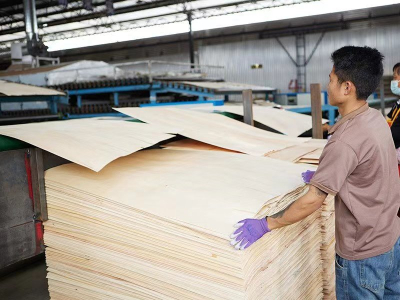
A multi-deck veneer dryer is designed for continuous work, so interruptions tend to ripple across the rest of the process. Shine Machinery highlights this point directly in its own product communications: customer concerns about dryer clogging and long production downtime are a key reason behind its newer equipment improvements.
In procurement terms, a practical way to look at downtime is simple: the more frequently a Wood Veneer Machine stops, the more difficult it becomes to maintain consistent Dry Veneer supply for downstream steps. Even when a plant has strong operators, frequent stops can complicate moisture control, material handling, and daily scheduling.
Shine Machinery positions its equipment upgrades around operational continuity, including the goal of eliminating clogging-related interruptions.
A six deck core dryer is typically chosen when a plant needs stable throughput and consistent drying results. Shine Machinery describes its 6 deck core veneer drying machine as a crucial phase of veneer production, with the objective of producing “high-quality optimally dried veneer sheets with the highest possible efficiency,” using hot and humid air inside the dryer to remove water and reduce moisture content to an optimized level.
For buyers comparing equipment categories, the real baseline is not just “does it dry,” but whether it can repeatedly produce Dry Veneer suitable for gluing—without creating avoidable defects that must be sorted out later.
From Shine Machinery’s published product description, the 6 deck core veneer dryer is presented as supporting these results:
Uniform moisture content and veneer that is flat without buckle or end waviness.
Dry Veneer that is free of splits, with a surface condition described as good for gluing.
Shrinkage and casehardening kept to a minimum, with collapse and honeycomb avoided.
An automatic control system described as saving labor cost, enabling easy operation, and supporting a low failure rate.
These points connect directly to what many mills care about most: Dry Veneer consistency, reduced handling rework, and predictable downstream bonding.
For a 6 deck line running under sustained load, construction details and control stability become central. Shine Machinery describes multiple design choices intended to support continuity and reduce operational friction.
Shine’s 6 deck core veneer drying machine is described as being equipped with an automatic control system. Separately, Shine’s “Automated Wood Veneer Drying” page emphasizes stable equipment and low failure rate, with a one-stop customizable service approach.
To keep messaging consistent with what is published, the buyer takeaway is that the veneer dryer is presented not as a standalone box, but as part of a controllable system intended to reduce dependence on constant manual adjustment.
Shine Machinery states that, for its automated veneer drying equipment, the roller uses a φ89 mm special shaft tube described as corrosion-resistant and rust-proof. On airflow and energy-saving positioning, Shine also states the use of axial flow fans, with a claim that the power of the whole machine is reduced by 38%.
For a purchasing team, these statements translate into a focused evaluation path: confirm roller durability assumptions, inspect fan and airflow layout, and verify that the operating approach fits the plant’s maintenance habits.
Shine Machinery publishes a typical internal temperature range for its veneer drying machine: 140–170°C, described as sufficient heat for fresh veneer drying.
This temperature range matters because it frames how the Veneer Drying Process is intended to be run in practice: using controlled hot air conditions to remove moisture to an optimized level. In procurement discussions, the goal is usually not “maximum drying,” but repeatable Dry Veneer suitable for stable gluing performance.
Shine Machinery also describes, in its broader veneer production process content, that Shine offers everything from individual drying plants with manual loading to complete veneer lines with automatic loading and stacking systems. This helps explain why many buyers evaluate not only the veneer dryer itself, but also how the line is configured around it.
Operating cost is not only about electricity; the heat source choice can dominate the long-run economics of a veneer dryer. Shine Machinery states that heat sources for its roller dryer are available beyond traditional options, including:
Steam boiler
Thermal oil heater
Natural gas
A patented biomass burner
In its product descriptions, Shine says the patented biomass burner can burn crushed wood chips and tree barks directly as fuel, positioning it as a way to address waste accumulation problems in veneer and plywood factories while reducing fuel cost.

For a buyer, the procurement logic is straightforward: a six deck core dryer with multiple heating options is easier to align with local energy availability and factory infrastructure.
To explore the core product families mentioned in Shine’s materials, buyers commonly start with these categories:
6 Deck Core Veneer Drying Machine
Biomass Veneer Dryer
Heat Thermal Oil Veneer Dryer
Different mills weigh costs differently, but the decision tends to come down to whether the veneer dryer can keep the Veneer Drying Process stable under real operating conditions.
The table below stays intentionally practical—focused on the criteria Shine emphasizes in its own product descriptions rather than theoretical scoring models.
| Evaluation focus | Entry-level mindset (risk-prone) | Continuity mindset (risk-aware) |
|---|---|---|
| Primary target | Lowest initial quote | Stable operation and predictable Dry Veneer supply |
| Downtime concern | Treated as occasional | Treated as a core cost driver |
| Dry Veneer quality | “Good enough” until problems appear | Uniform moisture and flat veneer prioritized |
| Heat source planning | Decided late | Matched early to steam, gas, thermal oil, or biomass |
| Configuration fit | Fixed sizes expected | Length, width, and layers expected to be customizable |
Beyond the dryer body, Shine Machinery’s veneer production materials describe complete lines, including automatic loading and stacking systems. Its automated drying page also highlights a customizable, one-stop service approach.
For buyers building or upgrading a line, it can be useful to evaluate how feeding, transfer, and output handling are matched to the chosen veneer dryer. A stable six deck core dryer can only deliver its full benefit when the material flow around it is designed to avoid bottlenecks.
Readers comparing automation approaches may also review:
Automated Wood Veneer Drying
Veneer Production Process
In Shine Machinery’s content, a veneer hot press dryer machine is presented alongside the broader roller veneer dryer line concept, with the same emphasis on configurable length, width, and layers, and on providing drying solutions rather than only equipment.
In purchasing discussions, a Veneer Hot Press Dryer is typically assessed on how it supports downstream expectations—especially when the mill’s priority is consistent processing rather than short-term cost cutting. Regardless of the chosen configuration, the common goal remains stable Drying Veneer and Dry Veneer preparation that supports gluing.
The most reliable purchasing decisions are usually made by translating brochure statements into a checkable acceptance plan. Based on Shine’s published descriptions, a buyer’s verification checklist for a 6 deck veneer dryer commonly includes:
Target temperature approach aligned to the published 140–170°C internal dryer range.
Moisture uniformity outcomes (uniform moisture, flatness, and reduced splits) aligned to your product spec.
Control system scope, including how automatic control supports easy operation and reduces manual dependence.
Roller construction confirmation, including the φ89 mm shaft tube description.
Energy plan confirmation across steam, natural gas, thermal oil, or biomass options.
Customization scope (length, width, and layers) aligned to your expected capacity planning.
A six deck core dryer is a long-term production asset. Shine Machinery’s published positioning focuses on continuity (including addressing clogging and long production downtime), controlled drying conditions, and configurable solutions that fit different plant needs.
For buyers screening a China veneer dryer manufacturer, China veneer dryer supplier, or even a China top veneer dryer factory claim in the market, a grounded approach is to focus on what can be specified, inspected, and accepted: the Veneer Drying Process conditions, the expected Dry Veneer quality characteristics, the heat source plan, and the operating features designed to reduce interruption pressure.
For product category browsing and configuration discussions, visit www.veneersdryer.com.
Shine Machinery states the temperature inside the veneer drying machine is 140–170°C, described as enough heat for fresh veneer drying.
Shine Machinery highlights uniform moisture content, veneer that is flat without buckle or end waviness, and Dry Veneer that is free of splits with a surface condition described as good for gluing.
Shine Machinery states heat sources are available including steam, thermal oil, natural gas, and its patented biomass burner.
Shine Machinery states its patented biomass burner can burn crushed wood chips and tree barks directly as fuel.
Shine Machinery states the roller uses a φ89 mm special shaft tube, described as corrosion-resistant and rust-proof.
Yes. Shine Machinery states it uses axial flow fans, with a claim that the power of the whole machine is reduced by 38%.
Copyright By © Shandong Shine Machinery Co.,Ltd
 ไทย
 Indonesia
 Melayu
 Tiếng Việt
 Pусский
 Portugues
 Français
 Deutsch
 日本語
 한국어
 العربية
 Italiano
 Polski
 Nederlands
 Türk dili
 हिन्दी
 Ελληνικά
 Svenska
 Español



