Waste wood is often viewed as a cost burden in plywood mills, but many plants also treat it as a practical heat source for a Veneer Drying System. The key question is not only whether waste wood handles can be fed into a built-in combustion furnace, but whether they can support stable combustion—the condition that protects consistent plywood veneer drying quality, predictable output, and controllable operating cost. This article focuses on a procurement-style checklist and uses published specifications from Shine Machinery’s dryer pages as reference points.

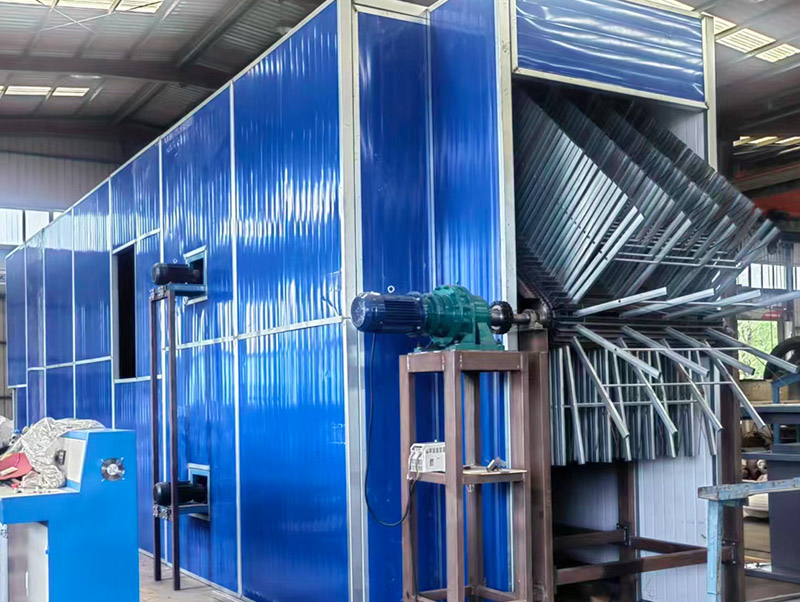
Any veneer dryer machine—whether configured as a vertical unit or a roller line—depends on steady hot-air conditions. When fuel quality swings wet one hour, oversized the next, and contaminated later, the furnace or burner must constantly chase the target temperature. In plywood veneer drying, that instability can translate into uneven results in Drying Veneer, especially when the production line is running continuously.
For buyers comparing options, it helps to separate two different questions:
Can the material burn? Many wood residues can burn.
Can the material burn consistently in your furnace or burner configuration? That is what keeps a Veneer Drying System predictable.
On the Shine Machinery product page for the 4 deck roller system, the documented fuel types for the biomass burner are crushed waste wood, tree bark, and wood chips. The same page describes the product as a 4 Deck Veneer Roller Dryer with a veneer thickness range of 0.6 mm–8 mm, a drying capacity of around 120 m³ per day, and a comprehensive veneer drying cost of USD 12/m³ inclusive of labor, fuel, and electric power.
When waste wood handles enter the discussion, they should be evaluated against those listed fuel categories. In practical terms, handles may behave more like waste wood only after preparation, for example size reduction, but the purchasing decision should be based on performance in the actual burner or furnace setup rather than on labels.
In Shine Machinery’s catalog, buyers can also reference the product page for the 4 Deck Veneer Roller Dryer to confirm which fuels are explicitly stated for that biomass burner configuration.
The following checklist is designed for procurement teams and production managers who want to trial waste wood handles in a veneer dryer machine without disrupting plywood veneer drying. It stays intentionally practical—focused on what can be observed, measured, and controlled on site.

Moisture variation is one of the fastest ways to destabilize combustion. Even if average moisture looks acceptable, large swings from batch to batch can push the furnace or burner into unstable operating behavior. For Drying Veneer, that instability can show up as uneven drying across shifts.
Handles can be long, cylindrical, or irregular. Those shapes may bridge, jam, or feed unevenly depending on the infeed design. The procurement takeaway is to confirm whether the material must be crushed or resized to behave more like the crushed waste wood category used in biomass burner specifications.
A clean fuel stream is easier to operate and maintain. Before trialing handles, sort out anything that is not plain wood. This is as much a reliability measure as it is a safety and housekeeping measure.
Ash characteristics affect maintenance rhythm and daily uptime. During a trial run, log the ash quantity and how often cleaning is needed. Even if heat output is sufficient, high ash burden can reduce the effective output of a Veneer Drying System.
A stable veneer dryer machine schedule requires stable fuel supply. If waste wood handles are sporadic, they may work better as a partial blend with more consistent wood residues such as chips or bark rather than as a primary fuel.
Shine Machinery describes its vertical dryer concept with uniform airflow, steady temperature, and a countercurrent drying cycle. Those characteristics are presented as the operating basis for achieving fast drying and uniform quality in the vertical configuration.
For buyers evaluating a Vertical Veneer Dryer in a plywood veneer drying line, fuel stability matters because it is the foundation under those airflow and temperature-control goals. If fuel swings cause hot-air swings, the operating advantages described for vertical drying become harder to realize in day-to-day production.
A helpful technical reference page is the Vertical Dryer Machine description, which outlines the airflow and temperature approach and notes that the chain brings veneer or finished board into the drying room for circulating drying.
Different plants choose different dryer layouts based on space, target output, and veneer type. In Shine Machinery’s published product pages, two common reference points are the Vertical Veneer Dryer models and the Low Cost Veneer Dryer roller configuration.
On the Wood Vertical Veneer Drying page, the model FBH30-13 is listed with these parameters:
Moisture content: fresh veneer dried to 0–5%
Output: 2 m³/h
Machine size: 13×3×4 m
Total power: 15 kW
Fuel consumption: 200 kg/h
The same page also states that the drying cost of the vertical dryer is less than $8/M³, and that the vertical plywood method increases loading capacity by 30–80% compared with other dryers.
Buyers can review these published points on the Wood Vertical Veneer Drying page when scoping a Vertical Veneer Dryer for plywood veneer drying.
Shine Machinery also lists a Low Cost Veneer Dryer Machine as a roller veneer dryer option with:
Working width: 3 m
Heating area length: 32 m
Veneer thickness: 0.8–8 mm
Drying capacity: 50–60 m³/day
Heat source: Biomass Burner (Other options available)
This model is typically evaluated when a buyer prefers a roller-style veneer dryer machine layout while keeping capital and operating planning straightforward.
For specification review, see the Low Cost Veneer Dryer Machine page.
If a plant wants to test waste wood handles as a fuel stream, the most procurement-friendly approach is staged:
Short controlled trial: Run a limited batch while tracking temperature stability and feeding behavior.
Blend trial: Mix handles with more uniform residues such as chips or bark categories commonly used in biomass systems to observe whether stability improves.
Operational decision: Approve the material only if it supports steady operation for the required plywood veneer drying schedule.
This approach keeps the Veneer Drying System predictable while still exploring opportunities to reduce fuel cost.
Can waste wood handles be fed into a built-in combustion furnace for a veneer dryer machine?
They may be feedable in practice, but the decision should be made after checking moisture consistency, size suitability for the feeder, cleanliness, ash behavior, and supply continuity.
What fuels are explicitly listed for the biomass burner on Shine Machinery’s 4 deck roller dryer page?
The listed fuels are crushed waste wood, tree bark, and wood chips.
What drying cost is stated for Shine Machinery’s vertical dryer pages?
The vertical dryer drying cost is stated as less than $8/M³.
What is the FBH30-13 output and fuel consumption shown on the Wood Vertical Veneer Drying page?
The listed output is 2 m³/h, and the listed fuel consumption is 200 kg/h.
How is the Low Cost Veneer Dryer positioned in the published specifications?
It is presented as a roller veneer dryer with 3 m working width, 32 m heating area length, 0.8–8 mm veneer thickness, and 50–60 m³/day drying capacity, using a biomass burner heat source with other options available.
Copyright By © Shandong Shine Machinery Co.,Ltd
 ไทย
 Indonesia
 Melayu
 Tiếng Việt
 Pусский
 Portugues
 Français
 Deutsch
 日本語
 한국어
 العربية
 Italiano
 Polski
 Nederlands
 Türk dili
 हिन्दी
 Ελληνικά
 Svenska
 Español



